Save 25% on Mountain Art.
Free shipping on qualifying orders.


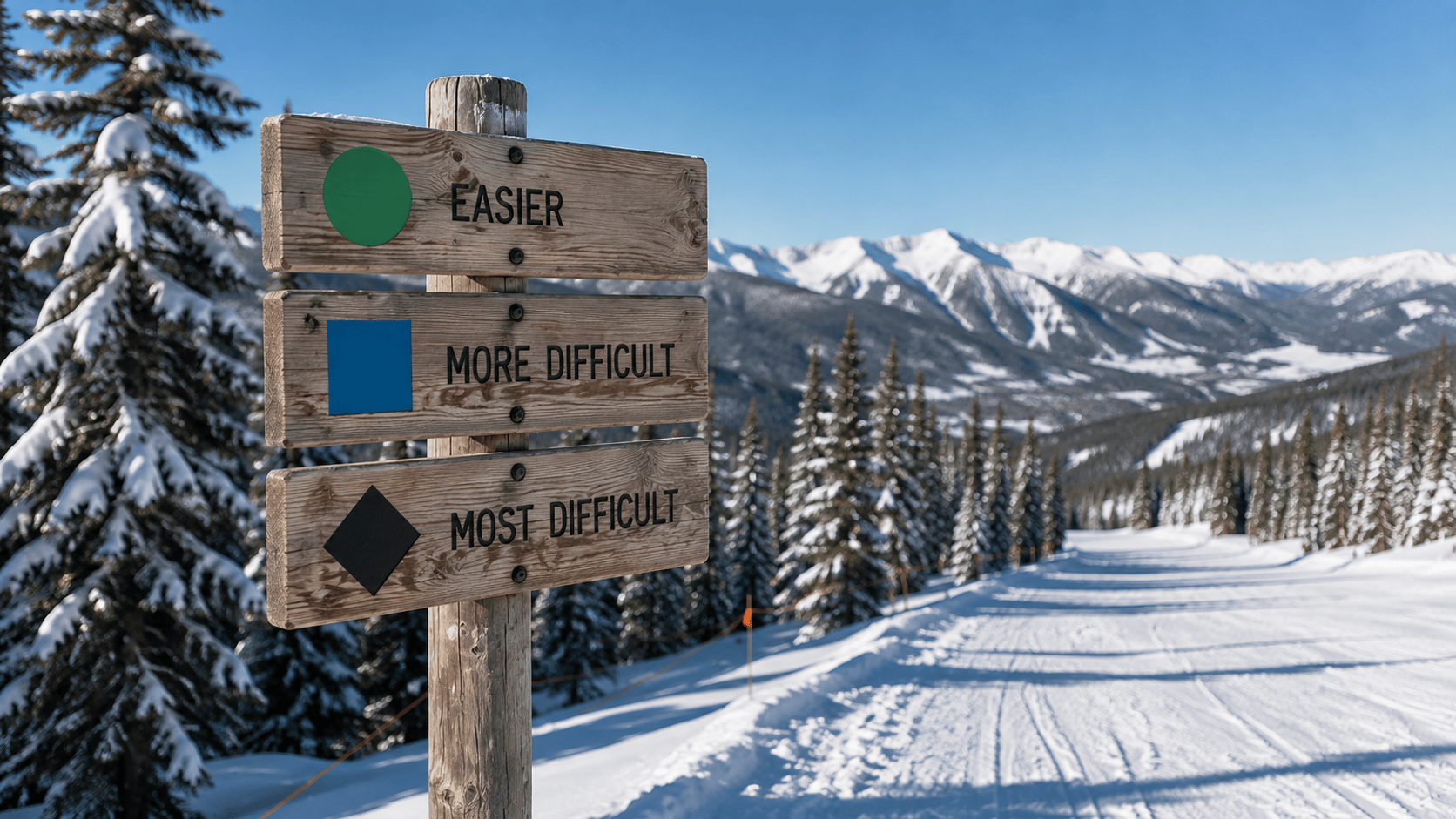
A Beginner's Guide to Ski Trail Difficulty Ratings (Green, Blue, Black
If you've ever stood at the top of a run, looked at a small colored shape on a sign, and quietly wondered whether you were about to make a terrible decision — this guide is for you.
Ski trail difficulty ratings look simple, but they trip up a lot of beginners for one specific reason: they're relative to the resort you're on, not an absolute, universal scale. A blue run at one mountain can feel noticeably different from a blue run at another. Here's what each rating actually means, and how to use that information wisely.
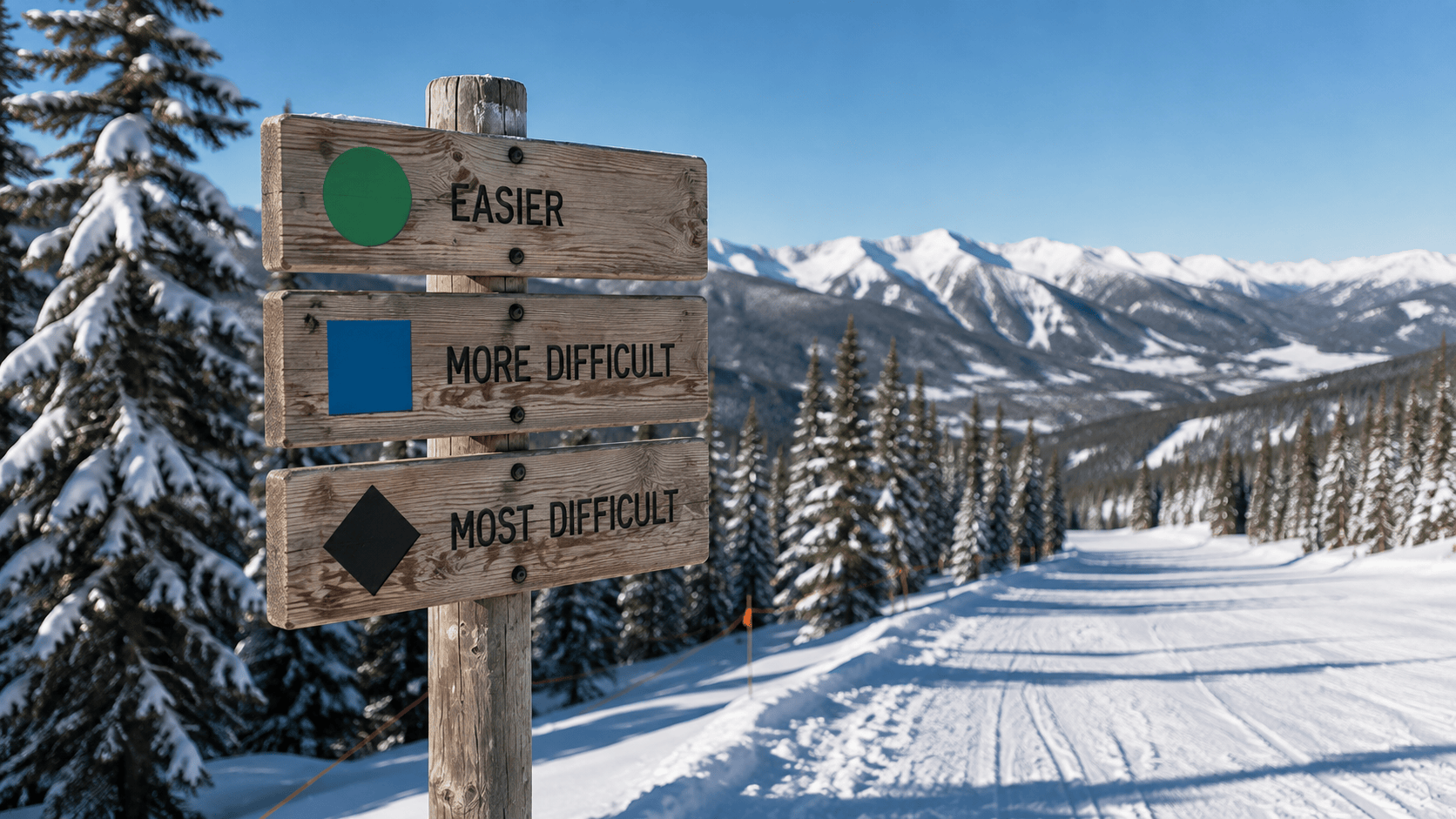
Green Circle — Easiest
A solid, unbroken green circle marks the gentlest terrain on the mountain — wide, gradually sloped runs designed for complete beginners and anyone still building basic control. These are the trails you'll typically find right at the base, close to the lodge and ski school area.
What to expect: wide open space, a gentle consistent slope, minimal obstacles, and usually higher traffic since it's where lessons happen.
Good for: first-timers, young kids, anyone easing back into skiing after a long break.
Blue Square — Intermediate
A single blue square marks intermediate terrain — steeper than green, often narrower, and generally where most confident recreational skiers spend the bulk of their day. This is the largest category of terrain at most resorts, and it covers a wide range within itself: an "easy blue" and a "hard blue" can feel quite different.
What to expect: noticeably more pitch, some narrower sections, occasional bumps or variable snow conditions, and less consistent grooming than green runs.
Good for: skiers who've moved past the basics and can control speed and turn confidently, but aren't ready for genuinely steep or technical terrain.
Black Diamond — Advanced
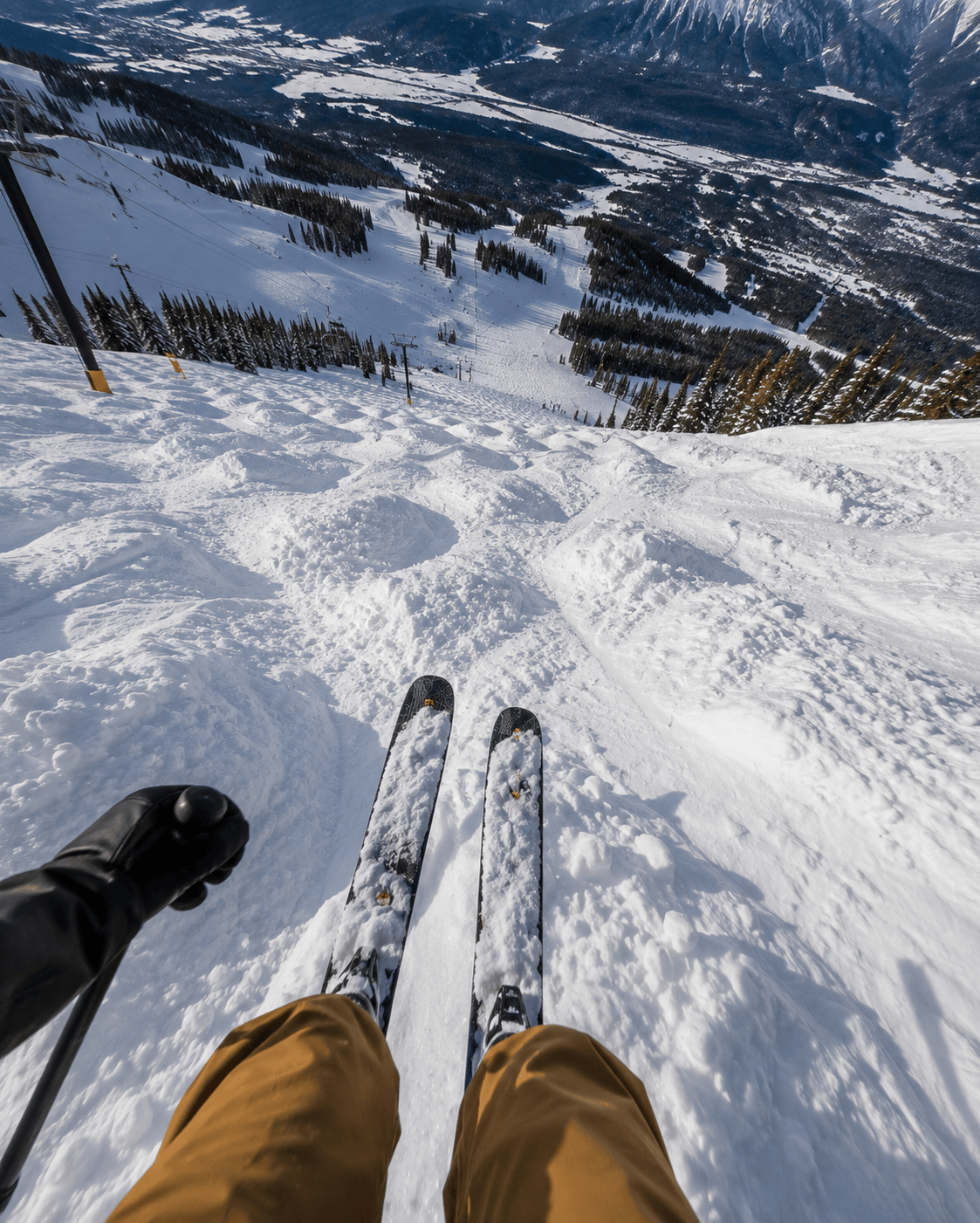
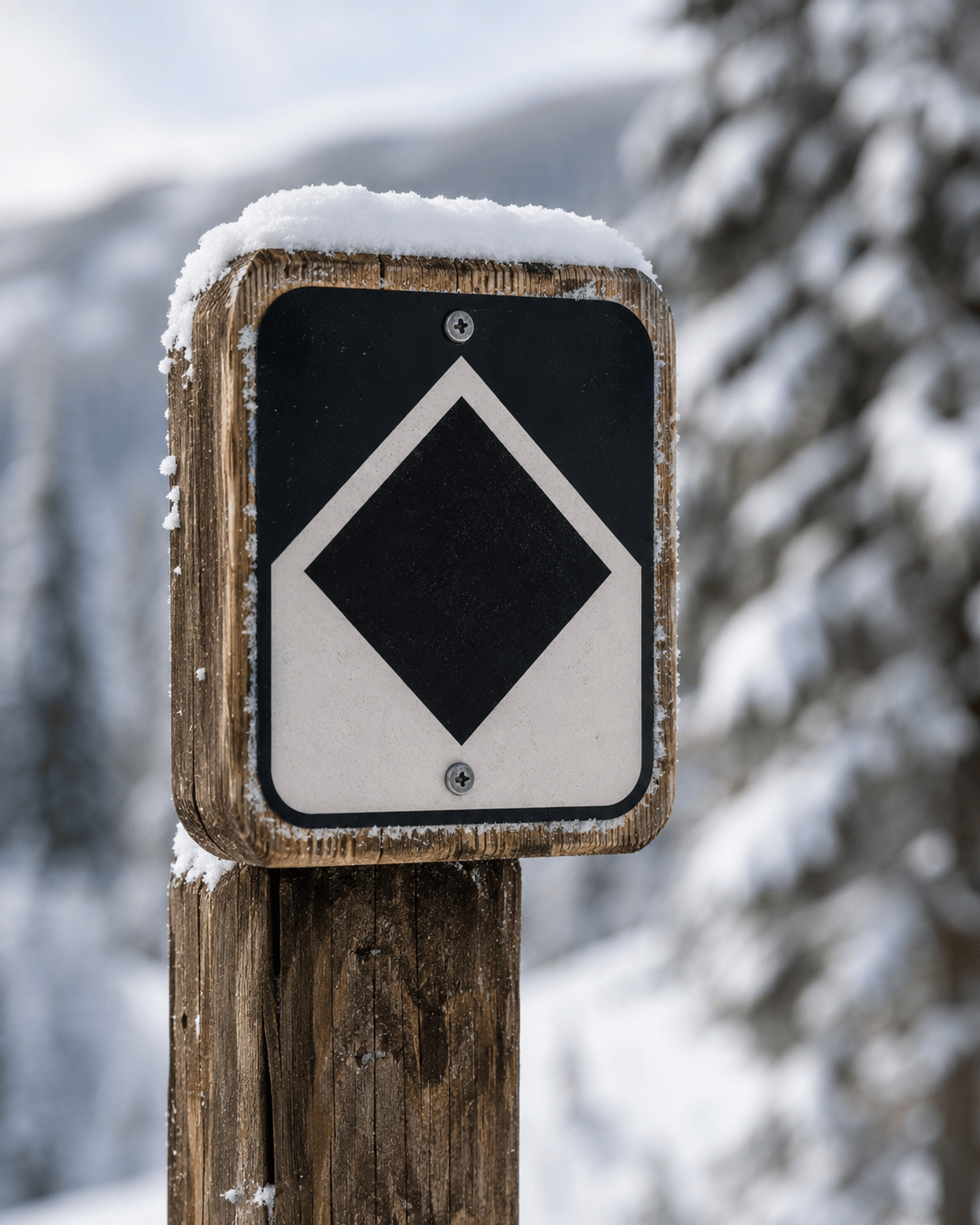
A single black diamond marks advanced terrain — steep, often ungroomed, and requiring solid technical control. This is where the mountain stops being forgiving of mistakes; falls happen faster and recovery is harder.
What to expect: steep sustained pitch, possible moguls (bumps), narrower trails, and terrain that's frequently left ungroomed on purpose.
Good for: experienced skiers who are comfortable with speed, steep pitch, and variable snow conditions.
Double Black Diamond — Expert Only
Two black diamonds mark the most demanding terrain a resort offers — extremely steep, often involving cliffs, tight chutes, or technical features that require real expertise to navigate safely. This isn't terrain to "try out" casually; resorts genuinely mean it when they mark something double black.
What to expect: extreme pitch, technical terrain features, minimal margin for error.
Good for: expert skiers only — this is not the category to push yourself into as a personal challenge without significant experience first.
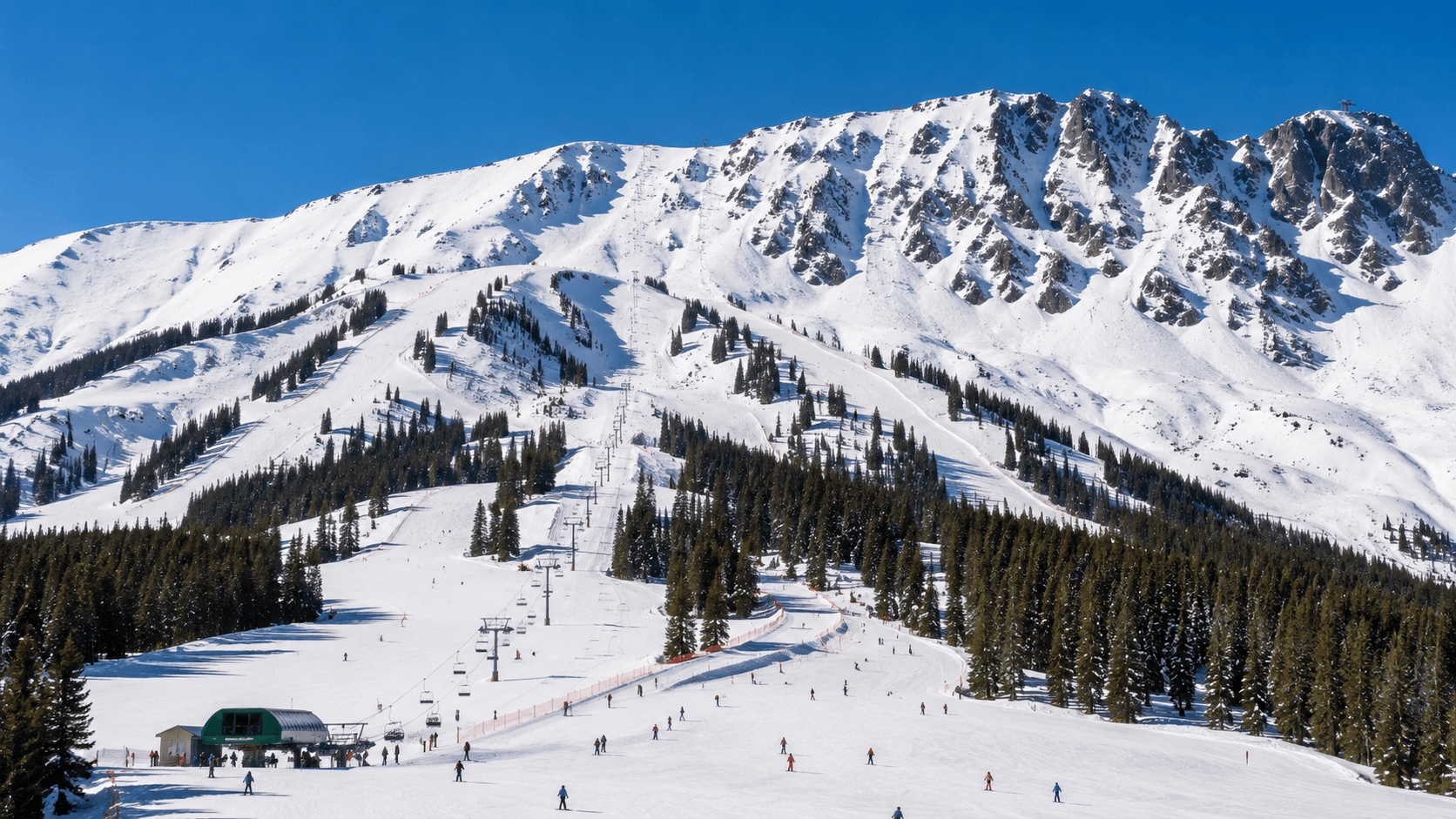
The Catch: Ratings Are Resort-Relative, Not Universal
This is the detail that trips up a lot of traveling skiers: a blue run at a smaller, gentler mountain might feel closer to a green at a bigger, more advanced resort — and vice versa. Ratings describe a run's difficulty relative to everything else at that specific resort, not against some universal scale across the whole country.
Practical takeaway: on your first run at a new resort, it's worth choosing a run one level below what you'd normally ski, just to calibrate how that particular mountain rates its terrain before committing to something harder.
A Few Extra Symbols Worth Knowing
- Terrain park markers (usually a distinct symbol, not a color) indicate features like jumps and rails — not a difficulty level in the traditional sense, but worth knowing if you want to avoid (or find) them.
- Dotted lines or shading on some trail maps indicate glade or tree-skiing areas, which add navigation complexity beyond the slope itself.
- "Easiest way down" arrows, common on resort apps, can help nervous skiers find a green or blue path back to the base from unfamiliar terrain.
The Bottom Line
Trail ratings are a genuinely useful tool, but they work best as a relative guide within a single resort, not an absolute measure of your skill level everywhere you go. When in doubt, start conservative on a new mountain, watch how other skiers are handling a run before committing to it, and remember that "easy" and "hard" are always relative to the specific slope in front of you.
Whichever color you spend most of your day on, it's usually worth remembering. Our hand-illustrated trail map blankets trace the real terrain — greens, blues, and blacks included — from resorts across the country.