Save 25% on Mountain Art.
Free shipping on qualifying orders.


Best Time to Ski Park City: Early Season vs. Peak Winter vs. Spring
Best Time to Ski Park City: Early Season vs. Peak Winter vs. Spring, Compared
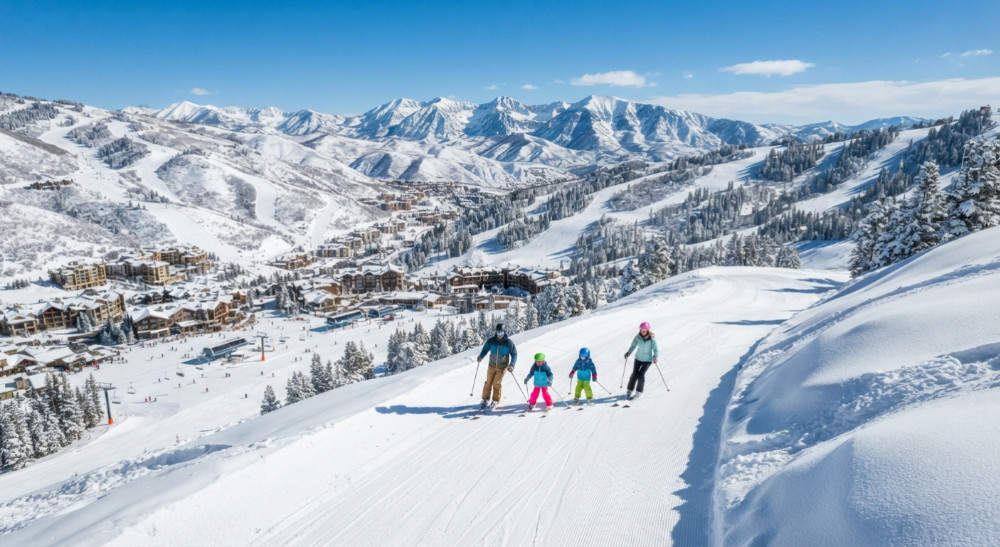
Park City doesn't have a bad time to ski — that's actually the problem. With roughly 355 inches of average annual snowfall spread across five solid months, almost any week between late November and early April will put you on real snow. So the real question for families isn't "when is skiing good," it's "which trade-off am I willing to make?" Because every window on the calendar hands you something great and quietly takes something away in return.
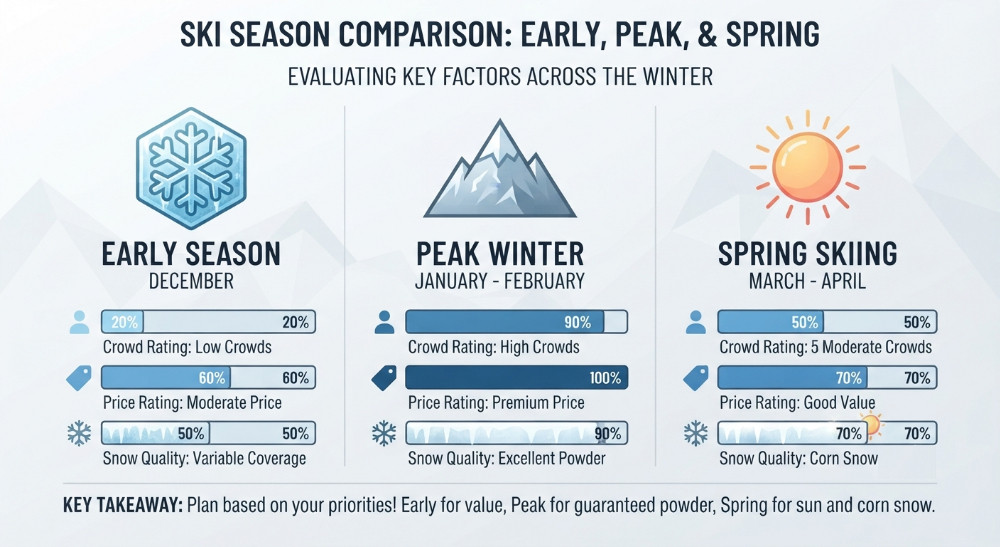
Here's how the three main seasons actually stack up against each other, so you can pick the trade-off that fits your family instead of guessing.
Early Season (Late November–Mid December): Cheap and Quiet, But a Gamble
What you get: Lower lift ticket prices, easier lodging availability, and a noticeably calmer mountain than you'll find any other time of the season. If your family values elbow room over guaranteed powder, this window rewards you heavily.
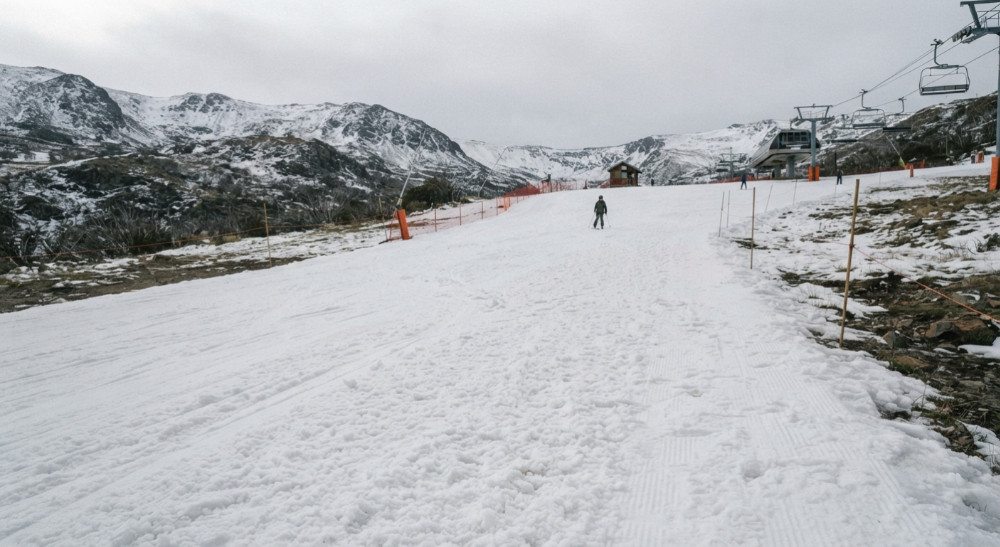
What you give up: Snow coverage is the real risk here. Early November typically sees around 30 inches of snowfall for the month, well below the winter peak, and resorts lean on snowmaking to keep runs open before natural snowpack catches up. That means limited terrain, a higher chance of thin coverage on ungroomed runs, and less reliability if your trip dates are locked in months in advance.
Best for: Families who are flexible, budget-conscious, and mainly want groomed-run beginner and intermediate terrain rather than deep powder or backcountry-adjacent bowls.
The honest trade-off: You're buying quiet and savings with your snow-quality odds. It can pay off beautifully in a good snow year — or leave you skiing mostly machine-made corduroy in a slow one.
Peak Winter (January–February): The Best Snow, The Biggest Crowds, The Highest Prices
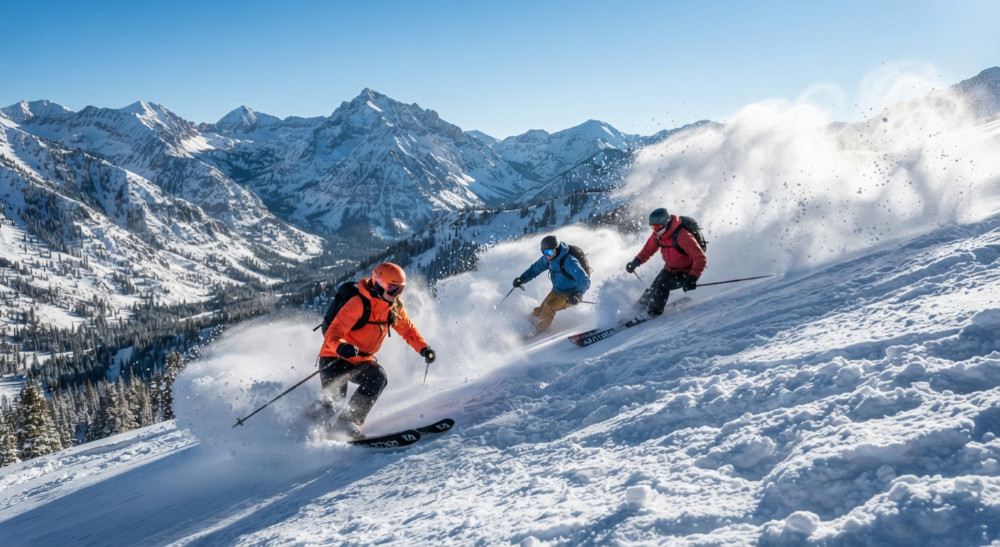
What you get: This is Park City at its most legendary. January averages around 80 inches of snowfall and February isn't far behind at roughly 75 inches, with cold, consistent temperatures locking in that famous "Greatest Snow on Earth" powder quality. February in particular is widely considered the strongest month of the season for snow, hitting that sweet spot before spring sun starts softening things up. If your family's top priority is world-class snow, full terrain access, and every lift running, this is the unambiguous answer.
What you give up: Crowds, cost, and calendar chaos. Peak winter is also peak demand — lodging rates climb, lift lines lengthen, and two specific stretches turn even a normally manageable mountain into a genuine circus: the week around Sundance Film Festival in late January, and Presidents' Week in mid-February. Sundance is a strange exception worth knowing about, though — because the festival draws film crowds into town rather than onto the slopes, the mountain itself can actually be quieter than you'd expect during that specific week, even while lodging prices spike from the festival traffic. Presidents' Week has no such loophole; it's simply the busiest stretch of the year on the snow.
Best for: Families chasing the best possible snow and full mountain access who can either travel midweek, avoid Presidents' Week entirely, or don't mind paying a premium for peak conditions.
The honest trade-off: You're buying the best snow of the year, and you're paying for it twice — once at checkout, and once in the lift line.
Spring Season (March–Early April): The Family Sweet Spot Nobody Talks About Enough
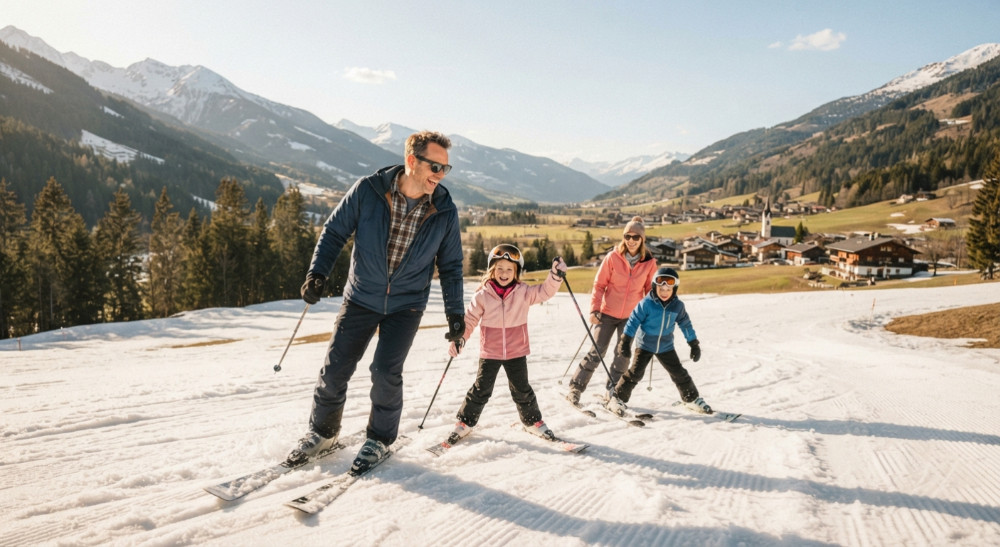
What you get: This is where the trade-off finally tilts back in your favor. March still delivers strong snowfall, averaging around 70 inches, meaning the base is typically deep and well-established rather than thin and early-season sketchy. Days get noticeably longer and milder, with highs climbing into the mid-40s°F by March and past 50°F by April, which matters enormously with kids — fewer meltdowns over frozen fingers, more willingness to stay out for extra runs. Crowds and prices both taper off compared to the January–February peak, and early April is known for occasionally delivering some of the best storm snow of the entire season as one last system rolls through before closing day.
What you give up: Snow quality becomes more variable within a single day. Morning runs can be firm or icy, especially on south-facing slopes, before softening into slushy, forgiving corduroy by early afternoon. The fix locals use constantly: chase north-facing terrain in the morning for firmer, better-preserved snow, then shift to south-facing runs once the sun has softened them up. It's an easy pattern to learn, but it does mean spring skiing rewards a bit of planning rather than just showing up and picking any run.
Best for: Families who want comfortable temperatures, manageable crowds, better prices, and don't mind timing their runs around the sun rather than skiing on autopilot.
The honest trade-off: You're buying comfort, value, and lighter crowds, and paying for it with a little extra homework on where to ski and when.
So Which Season Actually Wins for Families?
If forced to pick one default answer: March, and it's not particularly close. It combines a season's worth of snowpack, dramatically milder weather that keeps kids happier for longer days, and noticeably lighter crowds and pricing than the January–February peak — all without the coverage gamble that comes with going too early. Peak winter still wins outright if snow quality is genuinely your family's top priority and you can either travel midweek or absorb the cost of a holiday-week trip. Early season only makes sense if your travel dates are non-negotiable, your budget is tight, and you're comfortable treating a thin-coverage day as an acceptable outcome rather than a disappointment.
There's no universally "best" time to ski Park City — only the trade-off that matches what your family actually values on a given trip.