Save 25% on Mountain Art.
Free shipping on qualifying orders.


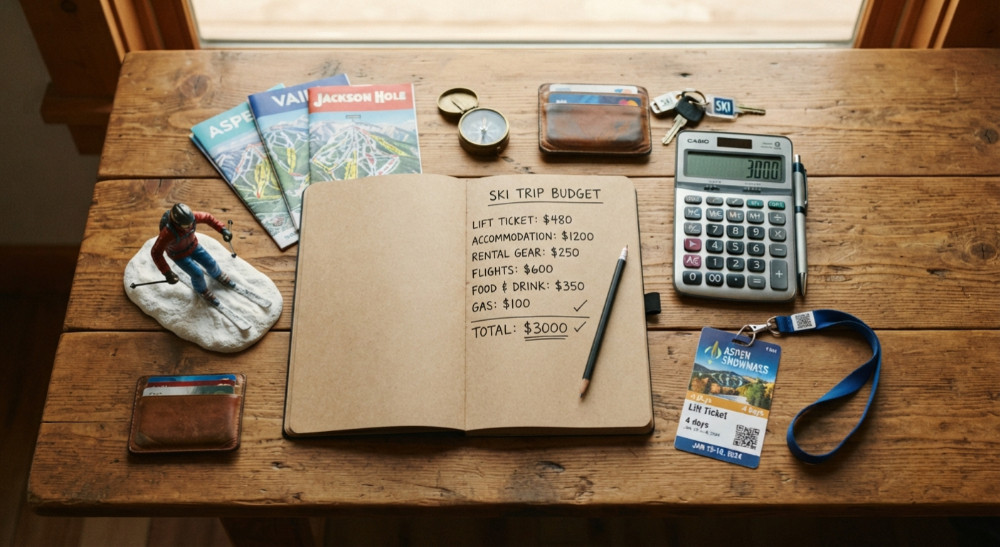
How to Plan a Ski Trip on a Budget: A Full Cost Breakdown
How to Plan a Ski Trip on a Budget: A Line-by-Line Cost Breakdown
Ski trips have a reputation for wrecking budgets, and honestly, the reputation is earned — a single unplanned day can run $80–$200 for a lift ticket, $50–$70 for rentals, and $100–$800 a night for lodging before you've even eaten lunch. But almost none of that spending is fixed. Every major cost category in a ski trip has a "full price" version and a "planned ahead" version, and the gap between them is usually enormous. Here's exactly where the money goes, and exactly how much you can realistically claw back in each category.
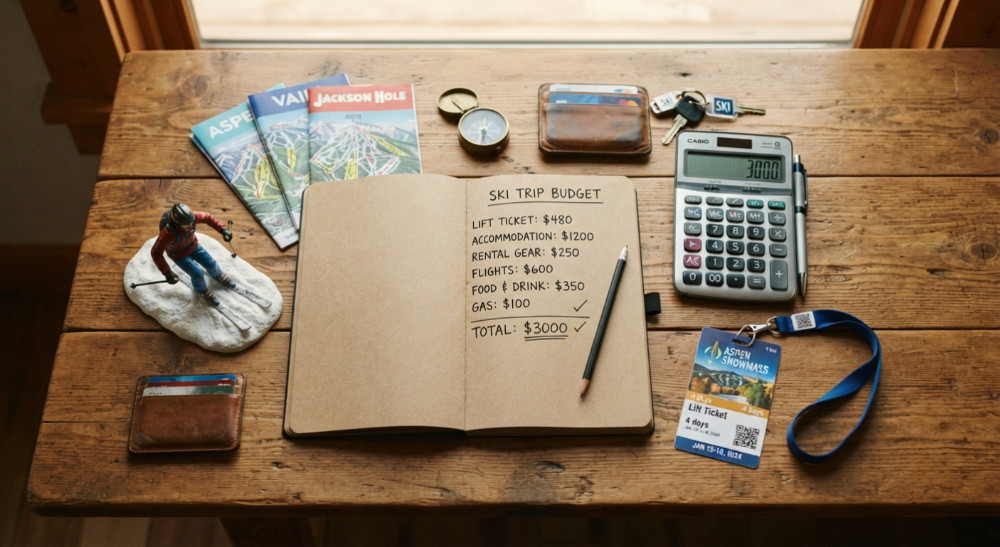
Lift Tickets: Save 20–50%
Full price: Walking up to the ticket window on travel day is the single most expensive way to buy a lift ticket — resorts price same-day, at-the-window tickets at a real premium precisely because it's the least price-sensitive way to buy.
Budget version: Buying online at least 7 days ahead typically saves 10–15% at most resorts, and some destinations push that even further — advance pricing has been reported to save $20–30 per ticket at Vail and up to $40 at Whistler. Multi-day packages compound the savings further, often cutting another $15–25 off the per-day rate compared to buying single days. Watch for resort flash sales too; several major resorts run recurring midweek discount promotions, sometimes as high as 30% off, often announced through email lists or resort apps.
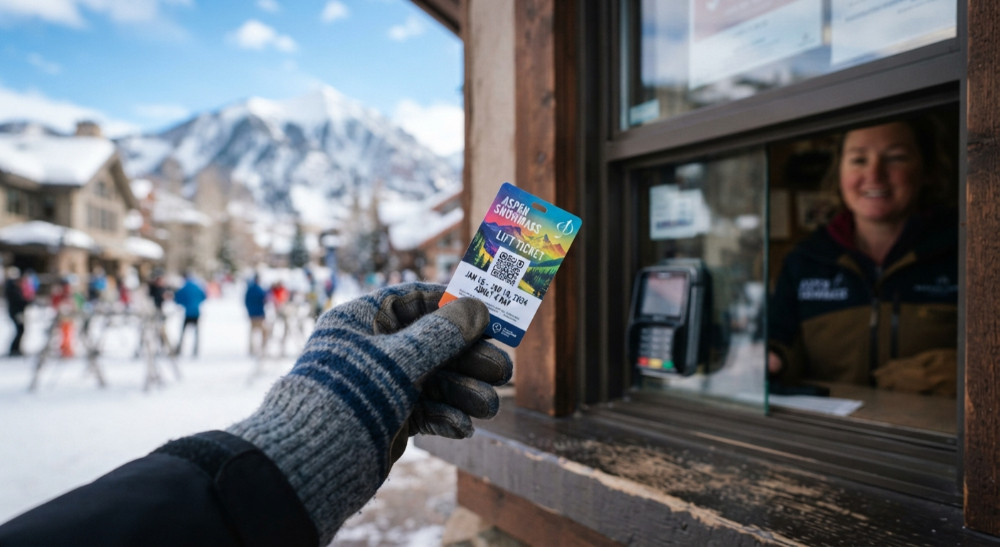
Line-item savings: roughly $20–60 per person, per day.
Timing: Save 30–50% Across Everything
Full price: Christmas week, MLK weekend, Presidents' Day weekend, and spring break aren't just crowded — they're the most expensive dates of the season across lodging, lift tickets, and even flights simultaneously.
Budget version: Shift your trip to January (after the holidays, before Presidents' week) or April, and the discount shows up in every category at once, not just one line item. Flying and skiing midweek — think Tuesday through Thursday — rather than over a weekend can cut lodging costs by 40–60% on its own, since resort towns price weekends at a steep premium regardless of season.
Line-item savings: this is the highest-leverage move on the entire list, because it discounts every other category simultaneously rather than stacking on top of them.
Lodging: Save 40–60%
Full price: Ski-in/ski-out lodging directly at the base area is genuinely convenient, but you're paying handsomely for that convenience, and prices swing hard toward the resort's peak dates.
Budget version: Staying in the surrounding town rather than slope-side, or 15–30 minutes from the resort, is one of the largest single savings available — off-mountain lodging can run 40–60% cheaper than staying at the base. If you're traveling as a group, booking one multi-bedroom condo or vacation rental instead of separate hotel rooms splits the fixed cost of a kitchen, living space, and parking across everyone, which usually beats even a discounted hotel rate per person. Watch for cancellation inventory opening up 6–8 weeks before your dates — that's often when better rates on ski-in/ski-out properties briefly reappear as other travelers' plans change.
Line-item savings: often the single biggest dollar amount you can recover on the whole trip.
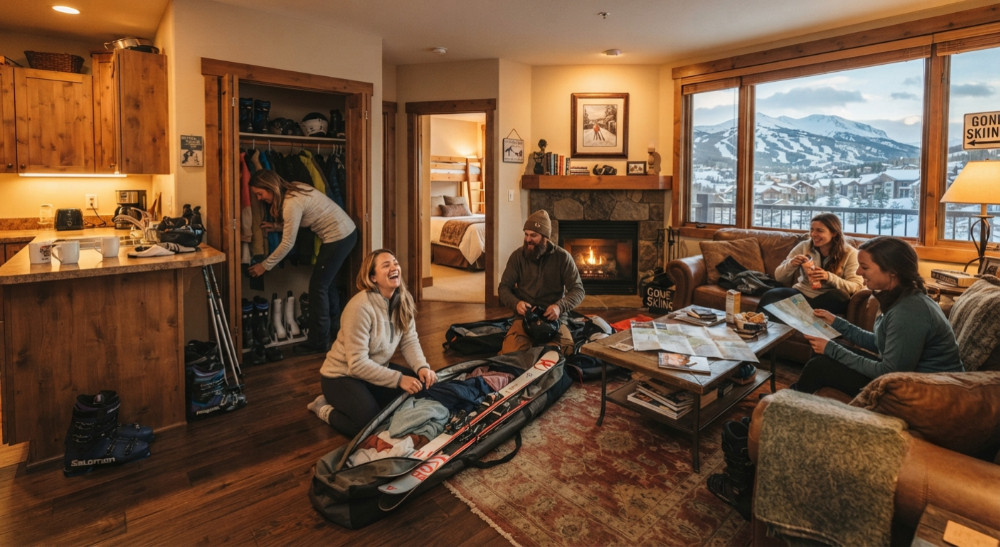
Gear Rental: Save 20–50%
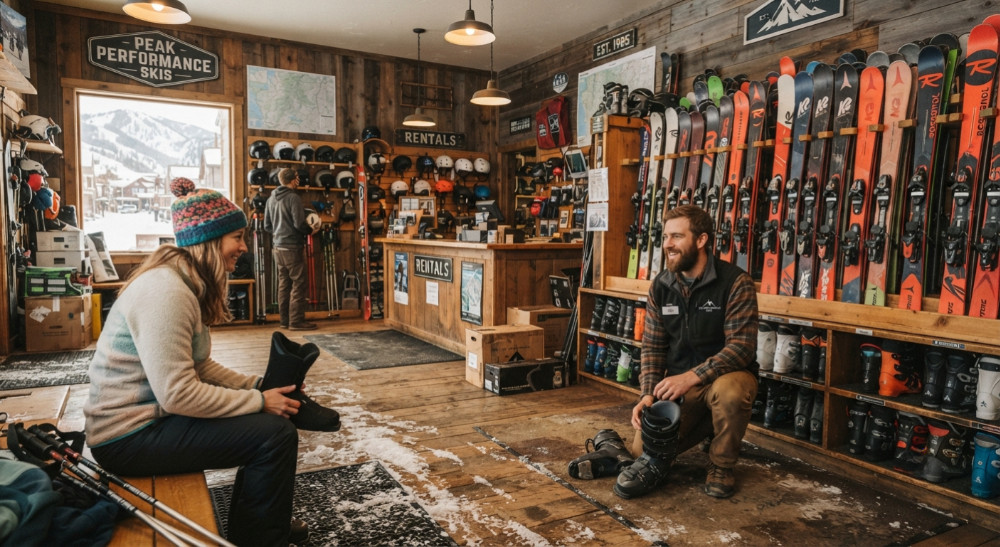
Full price: Renting skis, boots, and poles directly at the resort is convenient but consistently the most expensive rental option — resort-based shops often charge a real premium over rental shops just a short drive away in town.
Budget version: Rental pricing can vary by as much as 70% between shops in the same destination, so it's genuinely worth comparing a nearby town's rental shop against the resort's own counter — the difference between roughly $45–55/day at the resort versus $25–35/day in a nearby town adds up fast across a family. Booking rentals online in advance, rather than walking in, frequently unlocks an additional discount on top of that gap. If you already own gear or ski often enough to justify it, the math tends to favor buying once rental costs exceed roughly six or seven rental days at typical daily rates.
Line-item savings: roughly $15–25 per person, per day, just from shopping the rental price rather than defaulting to the resort counter.
Food: Save $30–50 Per Person, Per Day
Full price: Mountain lodge food is notoriously expensive, and buying lunch (and coffee, and snacks) on the mountain every day adds up into one of the most invisible costs of a ski trip.
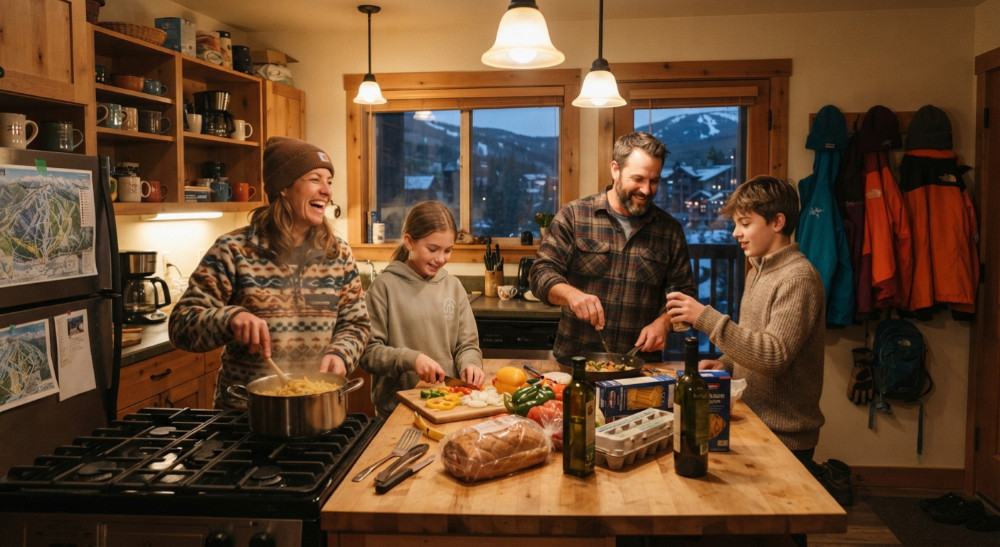
Budget version: Booking a rental with a kitchen and shopping at a grocery store on arrival day lets you pack your own lunches and cook group dinners instead of eating out every meal — a strategy that consistently saves the most money of any single category when you actually stick to it, since it applies every single day of the trip, not just once. Splitting cooking duties across a group, with each person or couple handling one dinner, keeps it from feeling like a chore.
Line-item savings: this is a daily, recurring saving rather than a one-time discount, which makes it add up faster than almost anything else on this list over a multi-day trip.
Lessons: Save by Choosing Group Over Private
Full price: Private ski instruction typically runs $400–600 per day, which is a legitimate expense for a specific need but overkill for most beginners.
Budget version: Group lessons run roughly $80–120 per day and, for most first-timers, deliver comparable skill-building since the fundamentals (stopping, turning, basic control) don't require one-on-one attention. Save private lessons for a targeted skill upgrade later, rather than a first-timer's starting point.
Line-item savings: roughly $300–500 per day if group lessons genuinely fit your needs.
Putting the Full Budget Trip Together
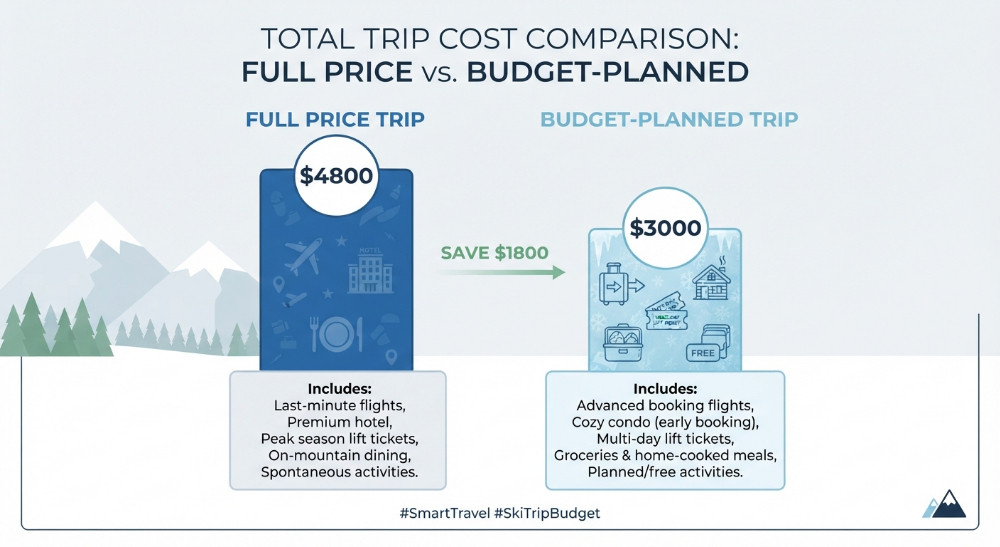
Stack even half of these moves on a single trip and the compounding effect is real: buy tickets a week out and in multi-day blocks, travel midweek during a shoulder-season window, stay in town instead of slope-side, rent gear off-mountain, and cook half your meals — and a trip that would have cost full price across every category can realistically drop by 40% or more, without cutting a single day of actual skiing.
The trick isn't sacrificing the trip. It's recognizing that "ski trip pricing" is really a stack of five or six separate decisions, and almost every one of them has a cheaper version that looks identical on the mountain.