Save 25% on Mountain Art.
Free shipping on qualifying orders.


How to Avoid Common Skiing Injuries: A Practical Prevention Guide
Skiing delivers a rare kind of adrenaline — speed, altitude, and open mountain terrain all at once. But that same combination of speed and unpredictable snow is exactly why skiing carries a real injury risk, especially for beginners. Orthopedic data consistently shows that inexperienced skiers are significantly more likely to get hurt than seasoned ones, and the injuries that follow are rarely random. They tend to follow the same handful of predictable patterns, year after year, resort after resort.
The upside is that most skiing injuries are preventable once you understand how they actually happen. This guide breaks down the most common skiing injuries, why they occur, and the specific habits that reduce your risk — informed by both orthopedic research and the recurring patterns ski communities online talk about when sharing their own "here's how I got hurt" stories.
The Injuries That Happen Most Often
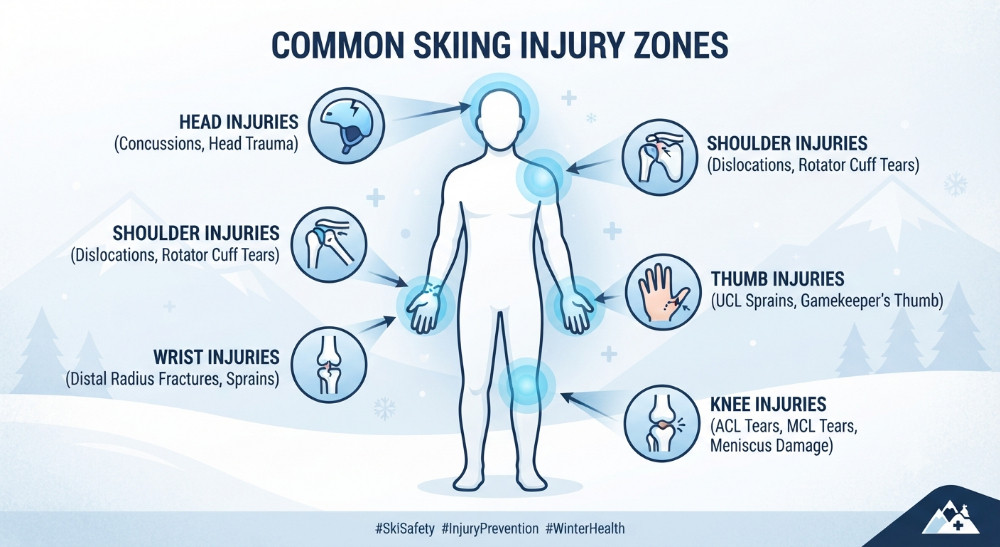
Before prevention, it helps to know what you're actually up against. According to orthopedic specialists, the knee is involved in roughly 45% of all skiing injuries, making it by far the most vulnerable joint on the mountain. Beyond the knee, the most frequent injury sites are the thumb, shoulder, wrist, and head.
- Knee ligament injuries (MCL and ACL tears) are the single most common skiing injury, often triggered by falls in the snowplow position or awkward twisting during a fall.
- Skier's thumb — a torn ligament at the base of the thumb — happens almost uniquely to skiers, usually when a pole yanks the thumb backward during a fall.
- Wrist and shoulder injuries occur when a falling skier instinctively throws out an arm to break the fall.
- Head injuries, while less common thanks to widespread helmet use, remain the most serious category and are strongly linked to skiing too fast for one's ability level.
Notably, beginners are considerably more likely to get injured than experienced skiers — which is exactly why prevention habits matter most in your first seasons, not once you're already advanced.
- Protect Your Knees First
Since knee injuries dominate the list, they deserve the most attention. Two mechanisms cause the vast majority of them:
MCL tears typically happen in the snowplow (wedge) position — the classic beginner stance for slowing down — when a skier's weight becomes unbalanced and they fall while their ski tips point inward. This is why MCL tears are disproportionately common among beginner and intermediate skiers rather than advanced ones.
ACL tears usually occur from a different mechanism: trying to catch yourself mid-fall. When a skier senses they're going down and instinctively tries to stand back up or twist away from the fall, the ski often stays planted while the body rotates — a pattern sometimes called the "phantom foot" effect. This sudden twisting force is one of the leading causes of ACL ruptures on the mountain.
How to reduce the risk:
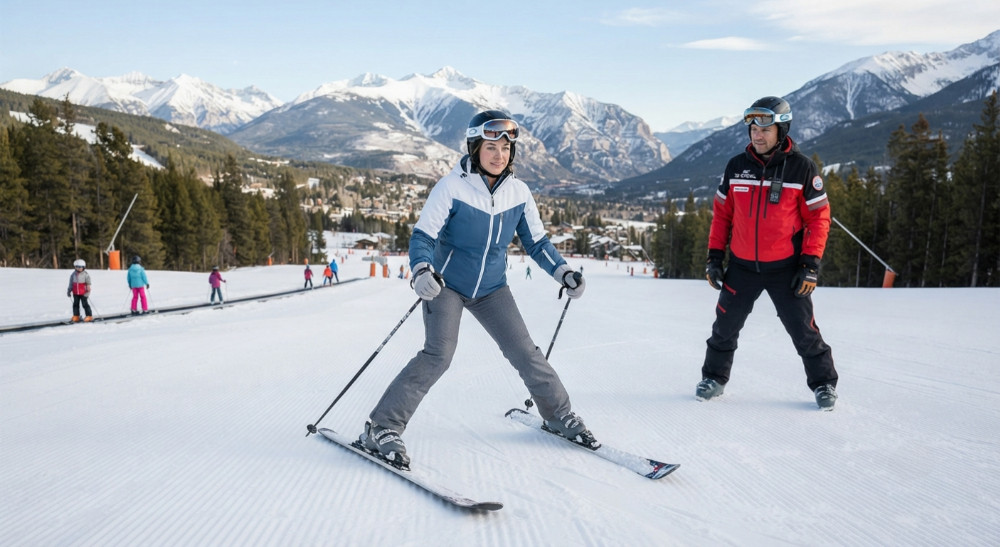
- Keep your weight centered and balanced when using the snowplow position rather than overloading one ski.
- If you feel yourself falling, don't fight it. Go with the fall instead of trying to catch yourself or stand up mid-way — this single habit is repeated constantly across ski injury discussions as the difference between a minor tumble and a torn ligament.
- Strengthen your quads, hamstrings, and glutes in the weeks before a ski trip; stronger muscles around the knee joint absorb more force before it reaches the ligaments.
- Make sure rental bindings are professionally set to your height, weight, and ability level — bindings that are too tight are a well-documented cause of avoidable knee injuries, since they should release before your knee absorbs the twisting force.
- Guard Against Skier's Thumb
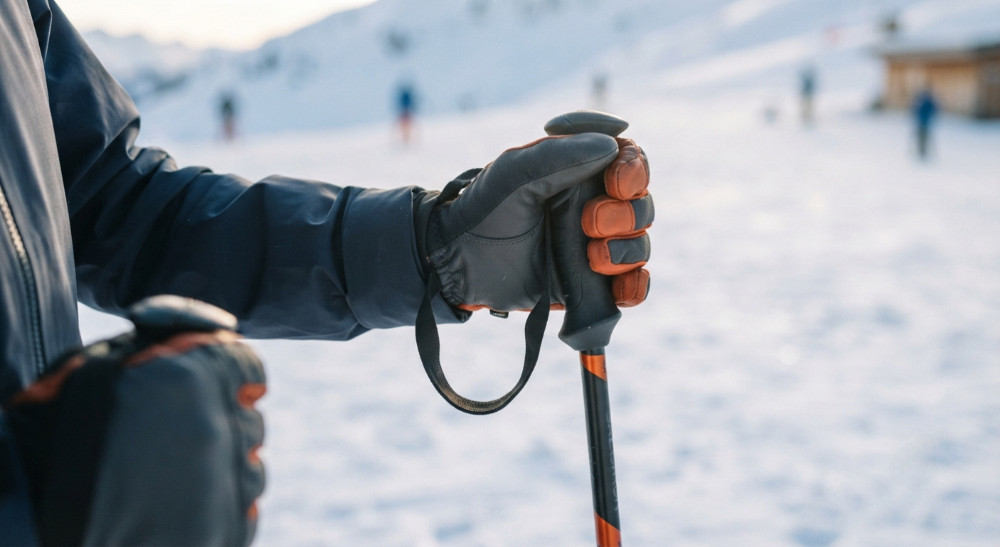
This injury catches a lot of first-timers off guard simply because they've never heard of it. It happens when a skier falls while still gripping a ski pole, and the pole yanks the thumb backward and away from the hand, tearing the ligament at its base.
How to reduce the risk:
- Avoid wrist straps that keep your hand locked to the pole — if you fall, your hand should be able to release the pole freely rather than being anchored to it.
- Learn to let go of your poles the moment you sense a fall coming, rather than gripping tighter out of instinct.
- Consider padded gloves with reinforced thumb support, especially in your first season.
- Change How You Fall
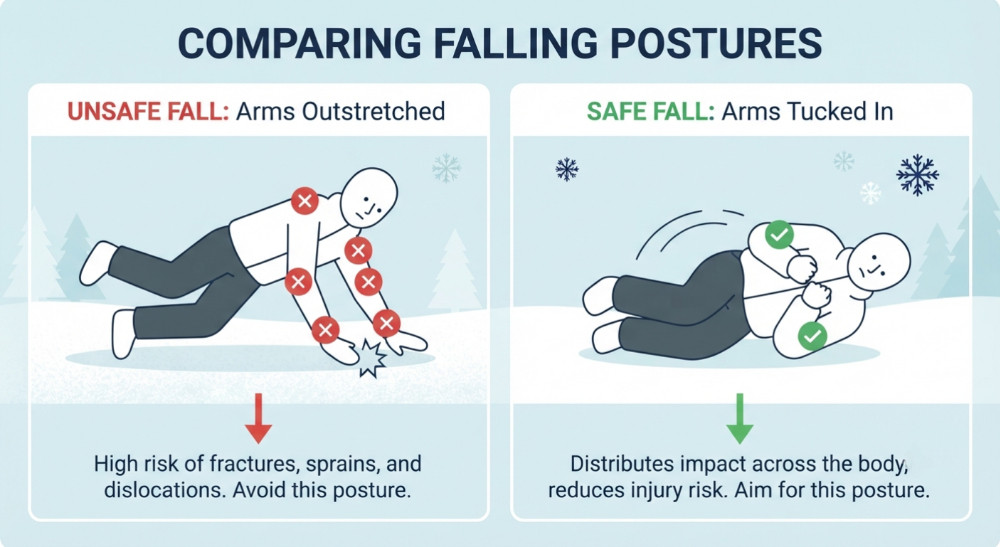
Wrist fractures and shoulder dislocations share a common cause: the instinct to throw an arm out to catch yourself. It's an automatic reflex, but on skis it transfers a huge amount of force directly into the wrist or shoulder joint.
How to reduce the risk:
- Practice keeping your arms in and close to your body rather than extended, so a fall lands across a broader area instead of concentrating force on one joint.
- Where possible, aim to fall onto your side or backside rather than forward onto outstretched hands.
- Wrist guards, commonly used by snowboarders, are increasingly recommended for beginner skiers too, particularly on icy or hard-packed days when falls are more frequent.
Community discussions among beginner skiers echo this repeatedly — the fall itself is rarely what hurts; it's the reflex to stop it that usually causes the injury.
- Wear a Helmet, Every Run
Head injuries are less frequent than knee or wrist injuries, but they're the most dangerous category by far, and speed is the biggest risk factor. Skiing beyond your ability level — going faster than your control allows — is consistently linked to the most severe head injuries on the mountain.
How to reduce the risk:
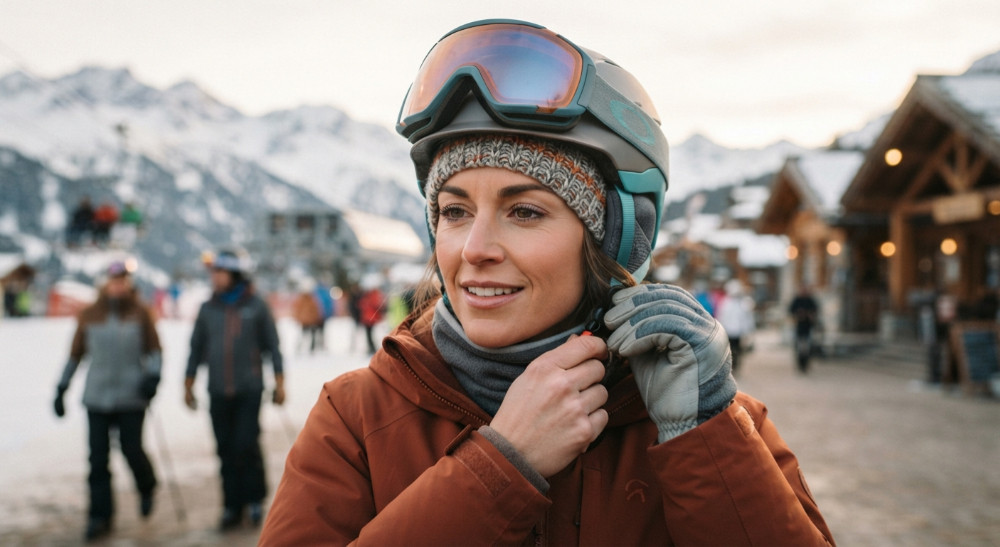
- Wear a properly fitted, ski-specific helmet on every run, not just on days that "feel risky."
- Match your speed to both your skill level and the day's conditions — icy, crowded, or low-visibility days call for slower, more cautious skiing regardless of your experience.
- Always ski in control, meaning you could stop or turn at any moment if someone appeared in front of you.
- Don't Underestimate Fatigue
A large share of skiing injuries — across every category — happen later in the day, when muscles are tired and reaction time slows. Fatigue doesn't just make you clumsy; it directly reduces the muscular support around your joints, particularly the knee, right when you need it most.
How to reduce the risk:
- Build a couple of easy, slow warm-up runs into the start of your day rather than skiing hard immediately.
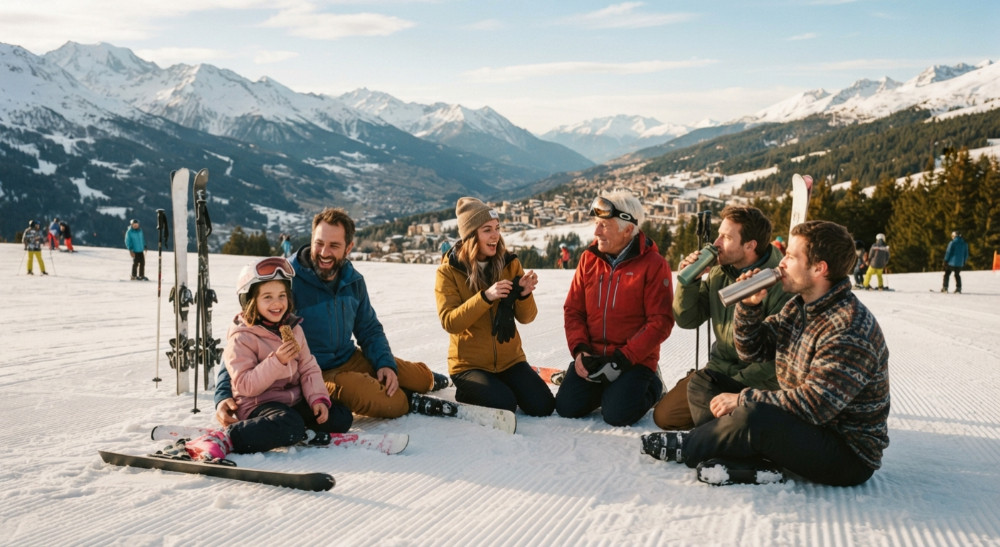
- Take real breaks before you feel exhausted, not after.
- If your legs are shaking or your form is falling apart late in the day, that's a signal to call it — not push for "one more run."
- Get Properly Fitted Equipment
Nearly every injury category above is made worse by poorly fitted gear. Ill-adjusted bindings, worn-out boots, or the wrong ski length all increase injury risk regardless of how careful your technique is.
How to reduce the risk:
- Always have bindings set by a professional at a certified ski shop, based on your accurate height, weight, and ability level — never estimate or adjust these yourself.
- Choose boots with a slight forward flex rather than the stiffest option available, which offers better control without over-stressing the knee.
- Recheck your equipment fit each season, especially if your weight or ability level has changed since your last trip.
The Bottom Line
Most skiing injuries follow the same short list of causes: overloaded knees in the snowplow position, instinctive reactions during a fall, poorly fitted equipment, fatigue, and skiing beyond your ability. None of these require you to ski more cautiously than is fun — they just require a few specific habits: let falls happen naturally instead of fighting them, keep your gear properly fitted, wear a helmet every run, and know when your body is telling you to stop for the day. Build those habits early, and the mountain becomes a lot less risky and a lot more fun.