Save 25% on Mountain Art.
Free shipping on qualifying orders.


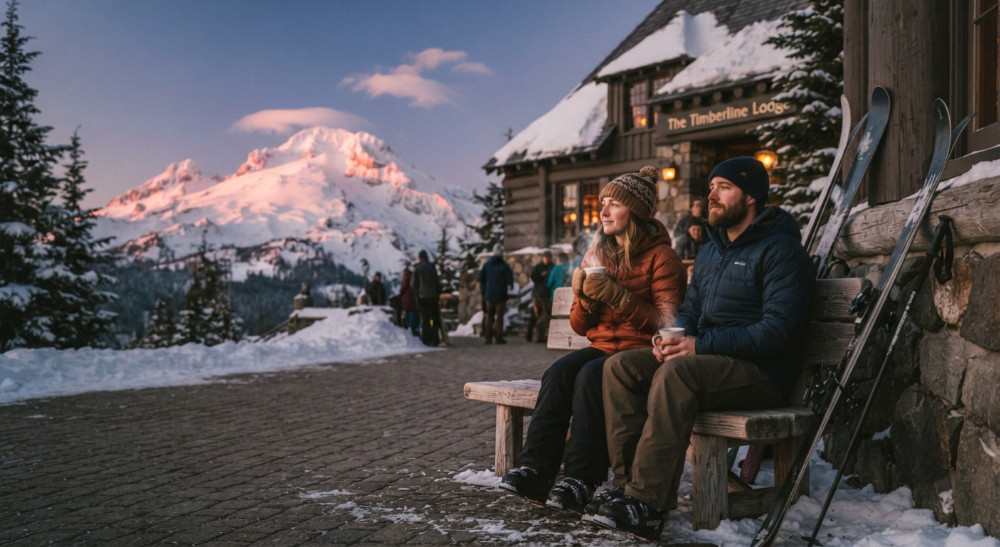
What Is Après-Ski? The Real History Behind America's Ski Tradition
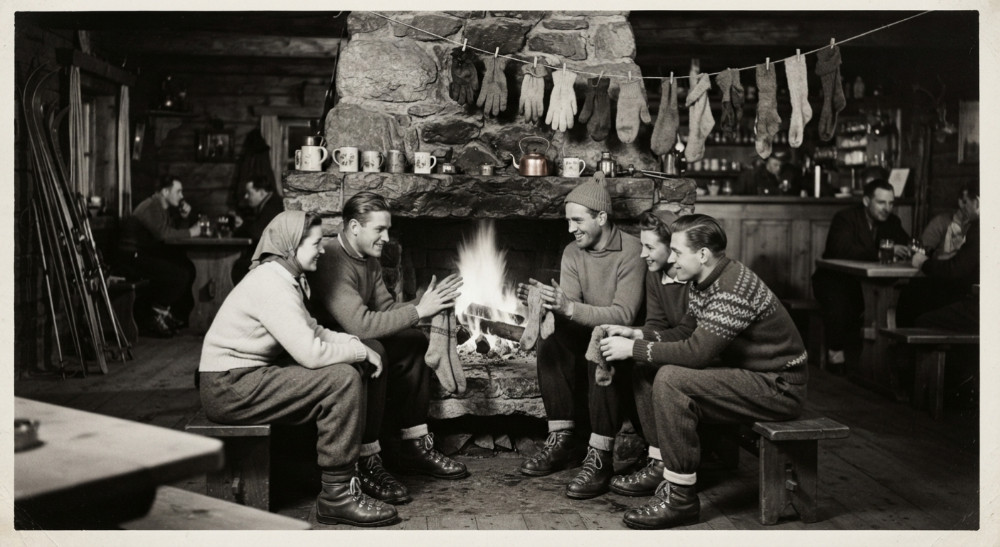
The word sounds glamorous — French, effortless, the kind of thing that belongs on a chalkboard menu next to a fireplace. But the honest origin of après-ski is a lot less romantic and a lot more relatable: a group of cold, tired people in wet wool, standing around a fire, waiting for their socks to dry.
That practical need — get warm, get dry, tell everyone about the run you just survived — is still the entire idea, even now that it involves a deck, a live band, and a $16 hot toddy. Here's how a fireside necessity in the Swiss Alps turned into one of the defining rituals of American ski culture, and where to actually find the real thing today.
Where It Actually Started
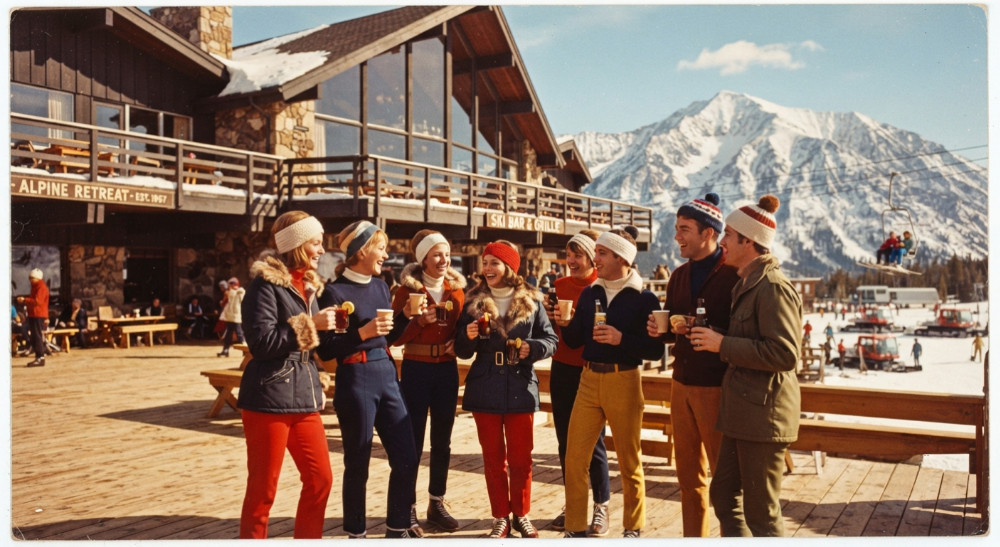
Long before the French gave it a name, British aristocrats were already doing it. In the 19th century, wealthy British travelers began spending winters at Swiss alpine resorts, and their after-skiing ritual of choice was, fittingly, hot tea — a warm, civilized way to recover from a cold, physically brutal day on primitive equipment. It wasn't a party. It was closer to a recovery routine.
That started to change by the mid-20th century. As commercial skiing boomed across the Alps in the 1950s, the tea got replaced — or at least heavily supplemented — with schnapps, mulled wine, and beer, and the ritual picked up a name that stuck: après-ski, simply French for "after skiing." Afternoon "tea dances" gave way to full dance parties in mountain taverns, with Austrian villages in particular leaning hard into folk music, oompah bands, and shots that had nothing to do with staying warm anymore. By the time skiing had become a fashionable pursuit for European jet-setters, après wasn't a footnote to the ski day. It was half the reason to book the trip.
How It Crossed the Atlantic
America's version of this story starts, unexpectedly, with World War II. The 10th Mountain Division — an elite U.S. Army unit trained for mountain and winter combat at Camp Hale, Colorado — produced a generation of veterans who came home with two things: a genuine love of the mountains, and firsthand experience of the Alpine ski culture they'd trained alongside overseas. Many of them went on to found or run America's earliest major resorts, including Aspen and Arapahoe Basin, and they didn't just import the terrain expertise. When resorts like Vail opened in the early 1960s, they were deliberately modeled after European alpine villages, right down to the sun terraces, the long lunches, and the tavern culture that came with them.
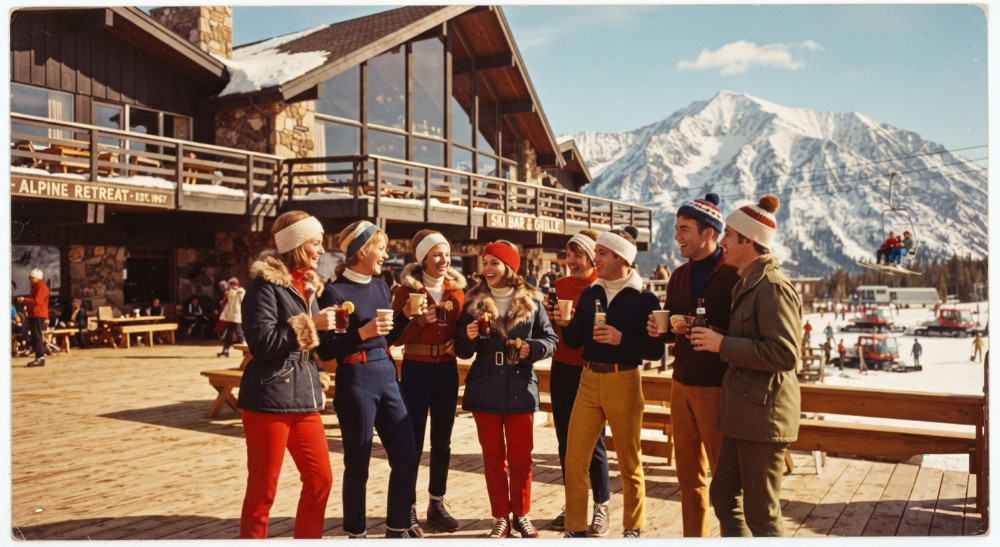
What happened next was distinctly American. By the 1960s and '70s, a new figure had planted itself firmly in ski towns: the ski bum — young, broke, seasonally employed, and completely devoted to the mountain lifestyle. Ski bums mixed freely with the wealthy jet-setters who'd started flying in for the scene (Aspen in this era had its own uniform, according to contemporary coverage: tight stretch pants, snow-crusted wool socks, and a belted nylon parka), and the two crowds built something looser and more democratic than the refined European original. Where the Alps leaned into folk tradition and formal dining, American resorts went wide open: outdoor decks where you could dance in your actual ski boots, live music starting mid-afternoon, hot tubs, and a general spirit of casual confidence that had very little to do with St. Moritz-style champagne-and-caviar elegance.
What It Looks Like in the US Today
Après in America was never one thing, and that's arguably its defining trait. It varies wildly by resort, sometimes by which side of the mountain you're standing on:
- Aspen, Colorado — The Little Nell has anchored the scene at the base of Aspen Mountain for decades; expect a more polished, see-and-be-seen version of the tradition.
- Jackson Hole, Wyoming — The Mangy Moose is the closest thing the American West has to an Alpine tavern: rustic, loud, band-driven, and unapologetically rowdy once the music starts.
- Park City, Utah — The High West Saloon holds the distinction of being the only ski-in, ski-out distillery in the world, which tells you plenty about how Utah's version leans.
- Killington, Vermont — Less a single bar than an entire stretch of Route 4, the access road, where the tradition is less "elegant patio" and more "bar crawl."
- Lake Tahoe, California — Northstar's Töst hands out a complimentary glass of champagne to skiers coming down the East Ridge trail, a small ritual that's become a signature of its own.
- Deer Valley, Utah — The Apres Ski Lounge and Beach Club goes the other direction entirely, with champagne and caviar closer to the original European register.
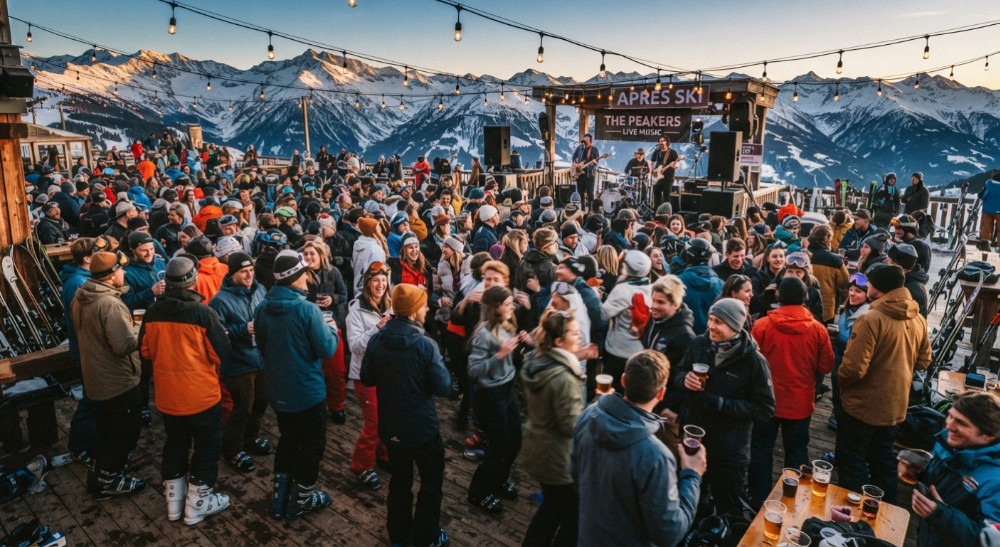
None of these are more "authentic" than the others. That range — rowdy access-road bar to caviar-and-champagne lounge — is the American contribution to the tradition: there was never a single correct way to do it, only a shared instinct that the day isn't over when the lifts stop turning.
The Debates Nobody Warned You About
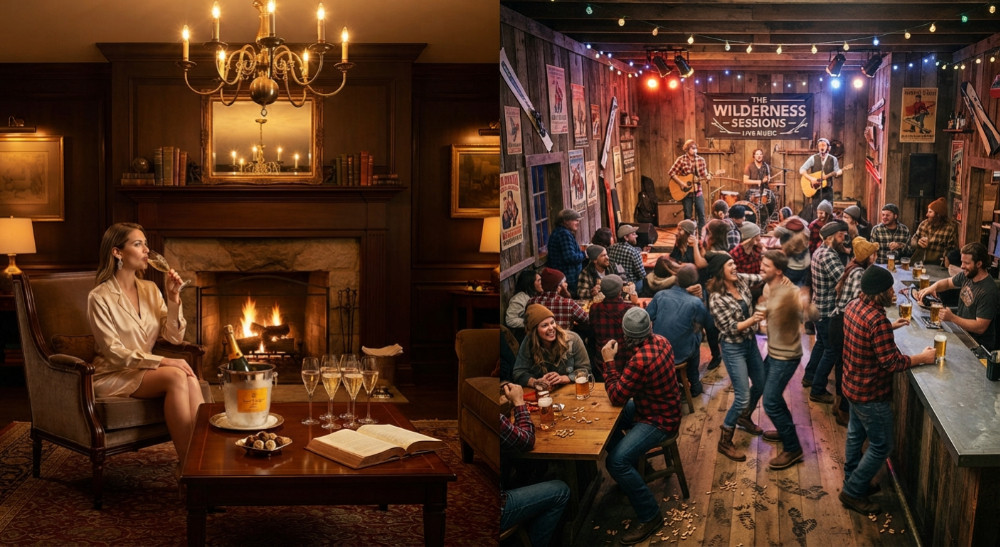
Spend time in ski forums during any given season and a few recurring arguments show up like clockwork. People genuinely disagree about when après is even allowed to start — technically it means "after skiing," but plenty of skiers treat 2 p.m. lift-adjacent patio drinks as a legitimate opening act rather than a violation of the rule. There's a widely shared superstition around never announcing "this is my last run," treated half-jokingly as an invitation for the mountain to punish you before you make it down. And there's a quieter, ongoing tension between two competing visions of what après is supposed to be: the loud, dance-on-tables, boots-still-on crowd chasing the 1970s ski-bum spirit, versus a newer, more wellness-minded generation treating it as a slower, calmer ritual — a hot drink and a fire rather than a party. Neither camp is winning; both versions run at full volume in different corners of the same resort, sometimes in the same building on different nights.
Still the Same Idea
Strip away the DJ, the deck, and the $16 hot toddy, and après-ski in 2026 is still doing exactly what it did for those cold, wet British travelers drying their socks by a Swiss fireplace over a century ago: turning the end of a physically demanding day into a shared ritual worth sticking around for. The clothes changed. The drinks changed. The music, obviously, changed. What didn't change is the basic math — a hard day on the mountain deserves a reward, and that reward is better with other people in the room.