Save 25% on Mountain Art.
Free shipping on qualifying orders.



What Is Cabincore? A Complete Guide to the Cozy Winter Aesthetic
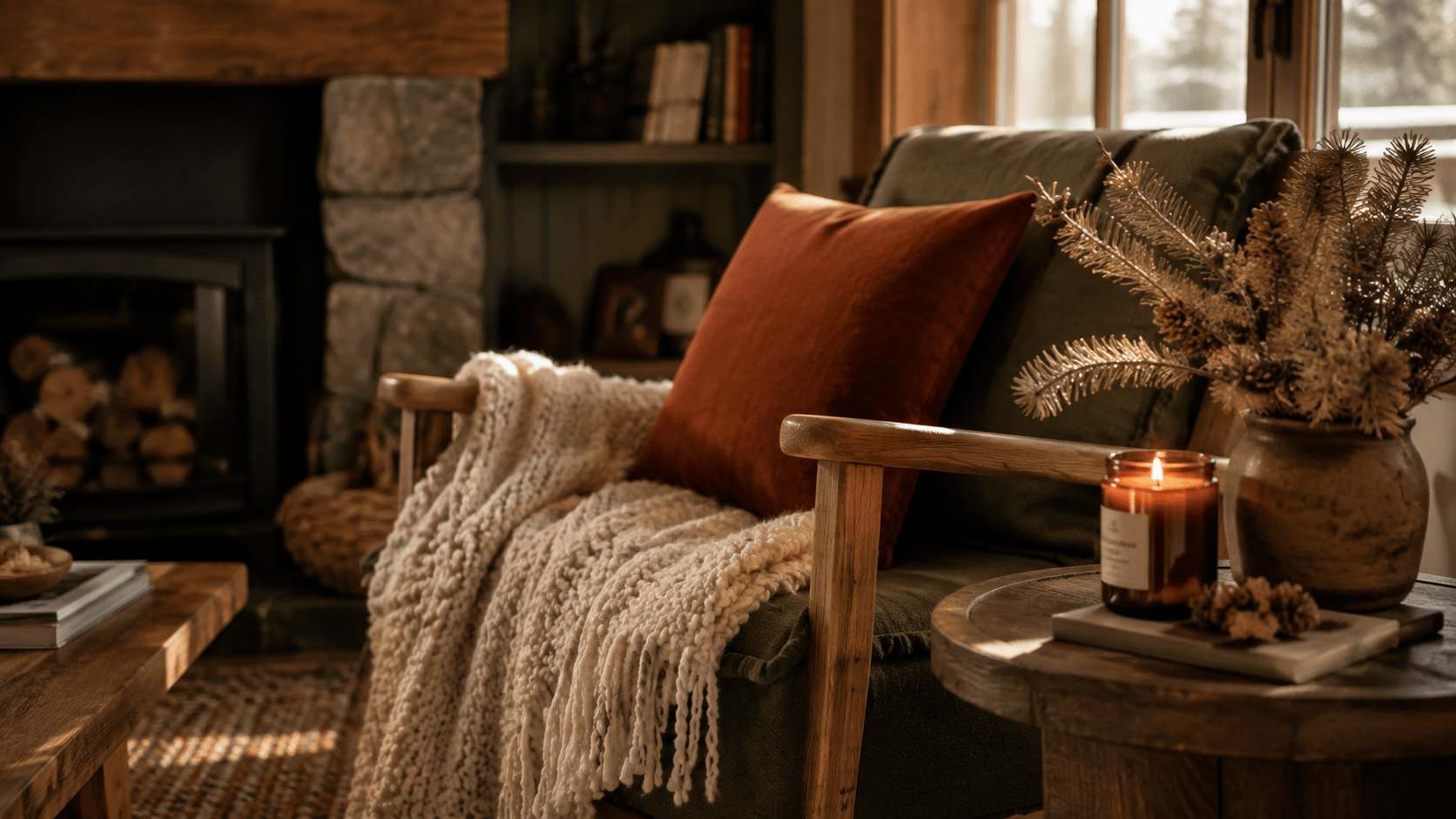
If you've spent any time on Pinterest or TikTok this winter, you've probably seen the word "cabincore" attached to photos of wood-paneled reading nooks, flickering candles, and blankets draped just-so over well-worn armchairs. It's one of the most searched home aesthetics of the season — and unlike a lot of design trends, you don't need to own an actual cabin to embrace it.
Here's everything you need to know about where cabincore came from, what actually defines it, and how to bring the look into your own home — no mountain property required.
So, What Exactly Is Cabincore?
Cabincore is a home and lifestyle aesthetic built around the feeling of a mountain cabin retreat: natural materials, warm lighting, soft textures, and a general sense of slowing down. Think exposed wood, wool blankets, candlelight, and the kind of quiet you associate with a snowed-in weekend away from everything.
Unlike aesthetics that are primarily about how a room looks in photos, cabincore is just as much about how a space feels. It's less about matching furniture and more about creating an atmosphere — the visual equivalent of the Danish concept of hygge, translated into North American cabin culture.
The core elements tend to include:
- Natural materials — raw wood, wool, sheepskin, stone
- Warm, low lighting — candles, string lights, fireplaces, lamps over overhead lighting
- Layered textures — chunky knits, sherpa throws, woven baskets
- Earthy color palettes — olive, terracotta, rust, cream, deep forest green
- Nature-adjacent decor — dried florals, pinecones, antler or mountain motifs

Cabincore vs. Cottagecore: What's the Difference?
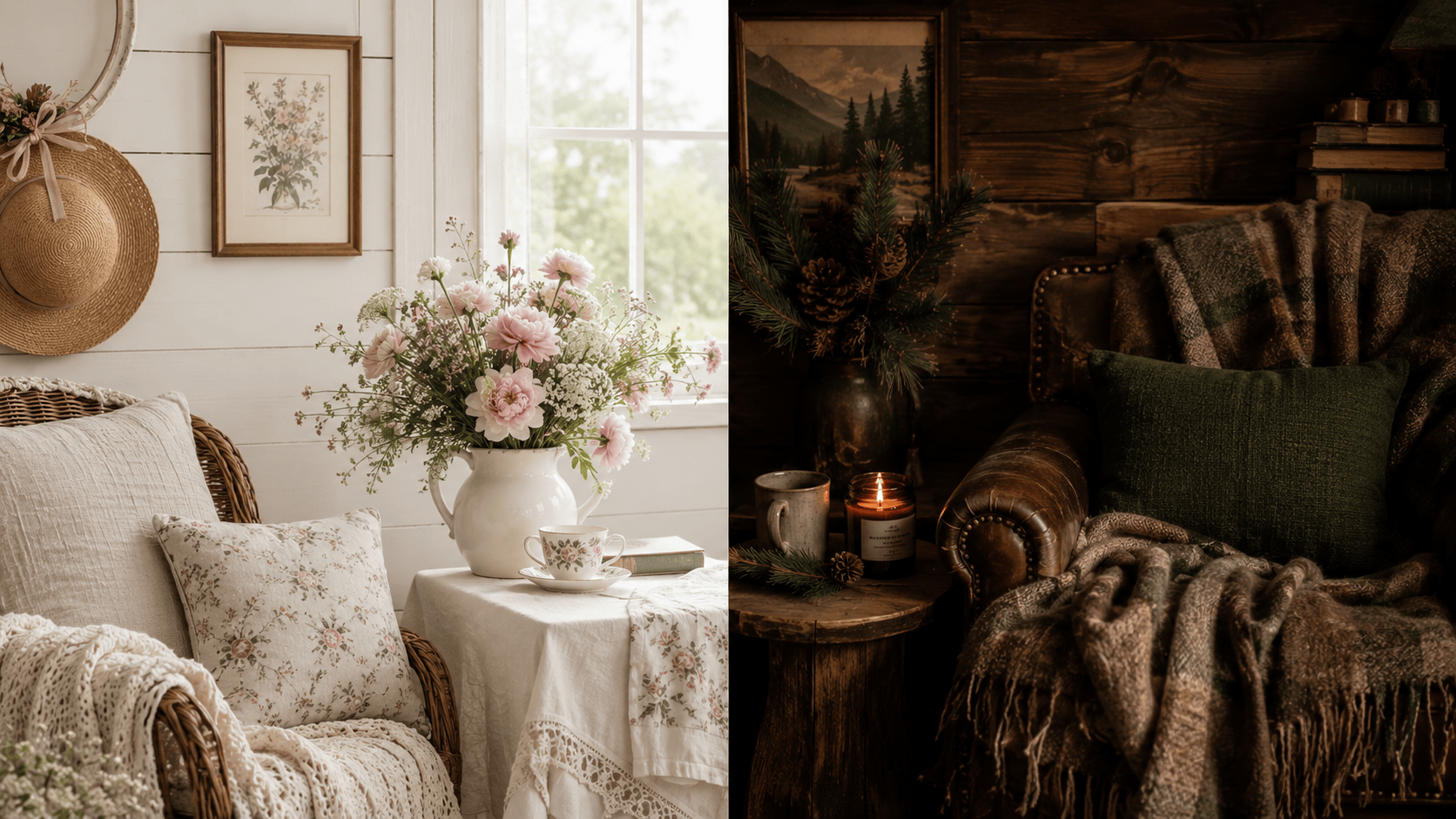
These two aesthetics get lumped together a lot, and they do share some DNA — both lean into a slower, more nature-connected way of living. But they come from different emotional places.
Cottagecore is pastoral and light — think English countryside, baking bread, floral prints, and soft pastel colors. It's inspired by garden cottages and rural farmhouse life.
Cabincore is more rugged and moody — think mountain lodges, dark wood, wool plaid, and deeper, earthier tones. It's inspired by alpine retreats and winter cabin life.
If cottagecore is a sunny afternoon in a garden, cabincore is a snowy evening by the fire. Both are about slowing down; they just borrow from different landscapes to get there.
Where Did Cabincore Come From?
Like most modern aesthetic trends, cabincore grew out of social media — specifically, a wave of interest in slow living, digital burnout, and a collective desire to romanticize disconnecting from screens. The pandemic accelerated a lot of this: with more people spending time at home, "make your home feel like an escape" became a genuinely practical design goal, not just an aspirational one.
Pinterest search data has shown consistent, seasonal growth in cabincore-related searches every fall and winter, which tells you two things: it's not a one-off viral moment, and it's tied closely to the colder months when people naturally start nesting indoors.
How to Bring Cabincore Into Your Home (Without a Full Renovation)
The good news: cabincore is one of the more accessible aesthetics to adopt, because it's built around layering texture and mood rather than a full furniture overhaul. Here's where to start.
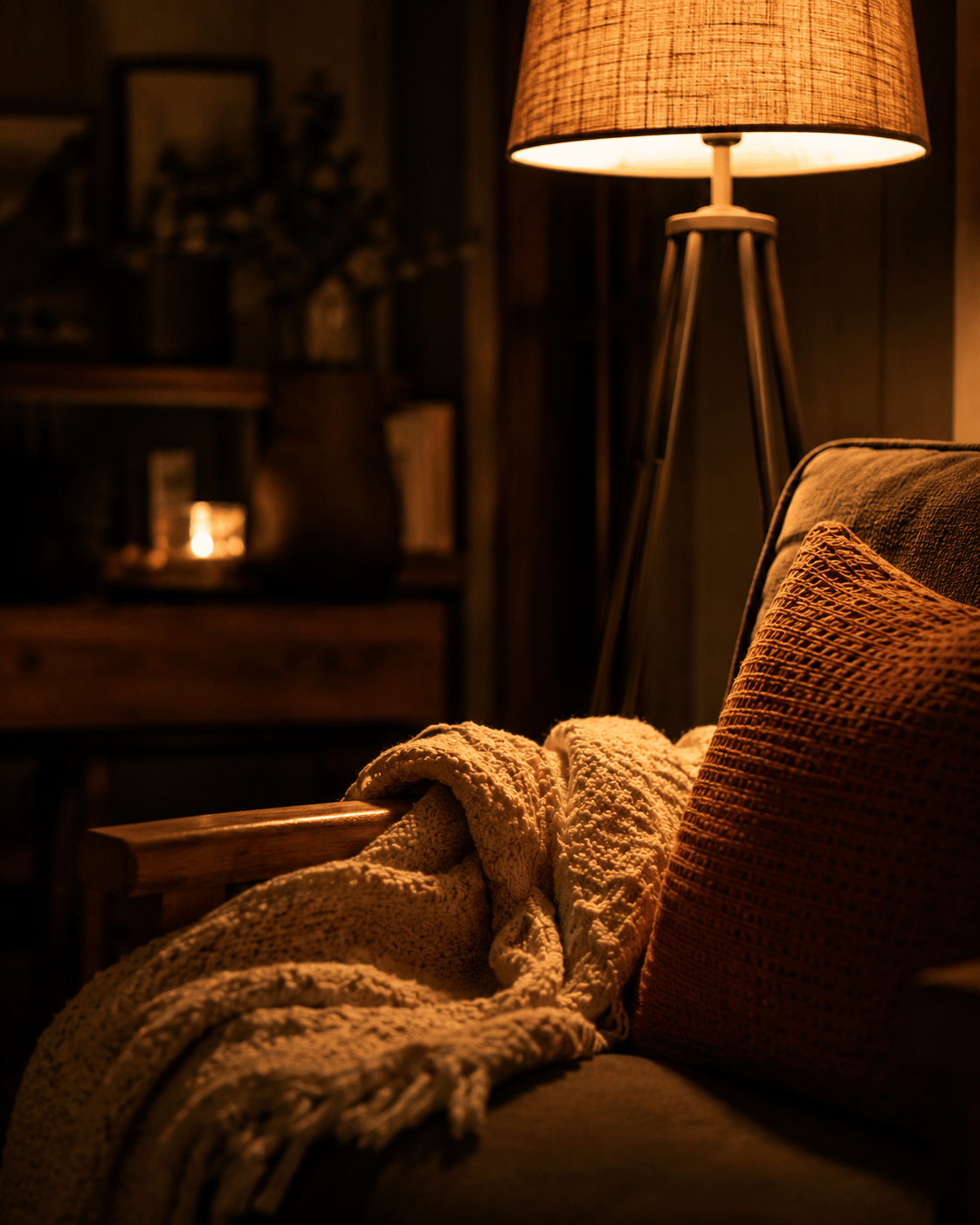
- Start with lighting. Swap harsh overhead lighting for lamps, string lights, or candles wherever it's safe to do so. Cabincore is almost entirely dependent on warm, low, ambient light — it's the fastest way to change how a room feels without buying anything new.
- Layer in texture before color. A chunky knit throw, a sheepskin rug, a woven basket for firewood or blankets — texture does more visual work in this aesthetic than color choices do. If you only make one purchase, make it something soft and touchable.
- Pick a grounded, earthy palette. Olive, rust, terracotta, cream, and deep forest green form the backbone of most cabincore spaces. These colors read as "natural" rather than "decorated," which is the whole point.
- Add one nature-adjacent detail. A small bundle of dried pine, a bowl of pinecones, a simple mountain-line illustration — one intentional nature reference goes a long way without tipping into full rustic-lodge territory.
- Choose pieces that are meant to be touched, not just looked at. This is the detail a lot of people miss. Cabincore isn't a look you admire from across the room — it's a look you're supposed to sink into. A blanket that's more decorative than functional will always feel slightly off in a genuinely cozy space.
A Few Cabincore Staples Worth Investing In
If you're building out a cabincore corner from scratch, a few pieces tend to do the most visual and functional heavy lifting:
- A textured throw blanket in an earthy tone — ideally something you'll actually use, draped over a chair or the back of a sofa
- Warm-toned lighting, whether that's a floor lamp, string lights, or a cluster of candles
- One piece of alpine-inspired wall or textile art — a simple mountain illustration does more for the aesthetic than you'd expect
- A basket or bin for firewood, blankets, or throws — functional storage that doubles as texture
The Bottom Line
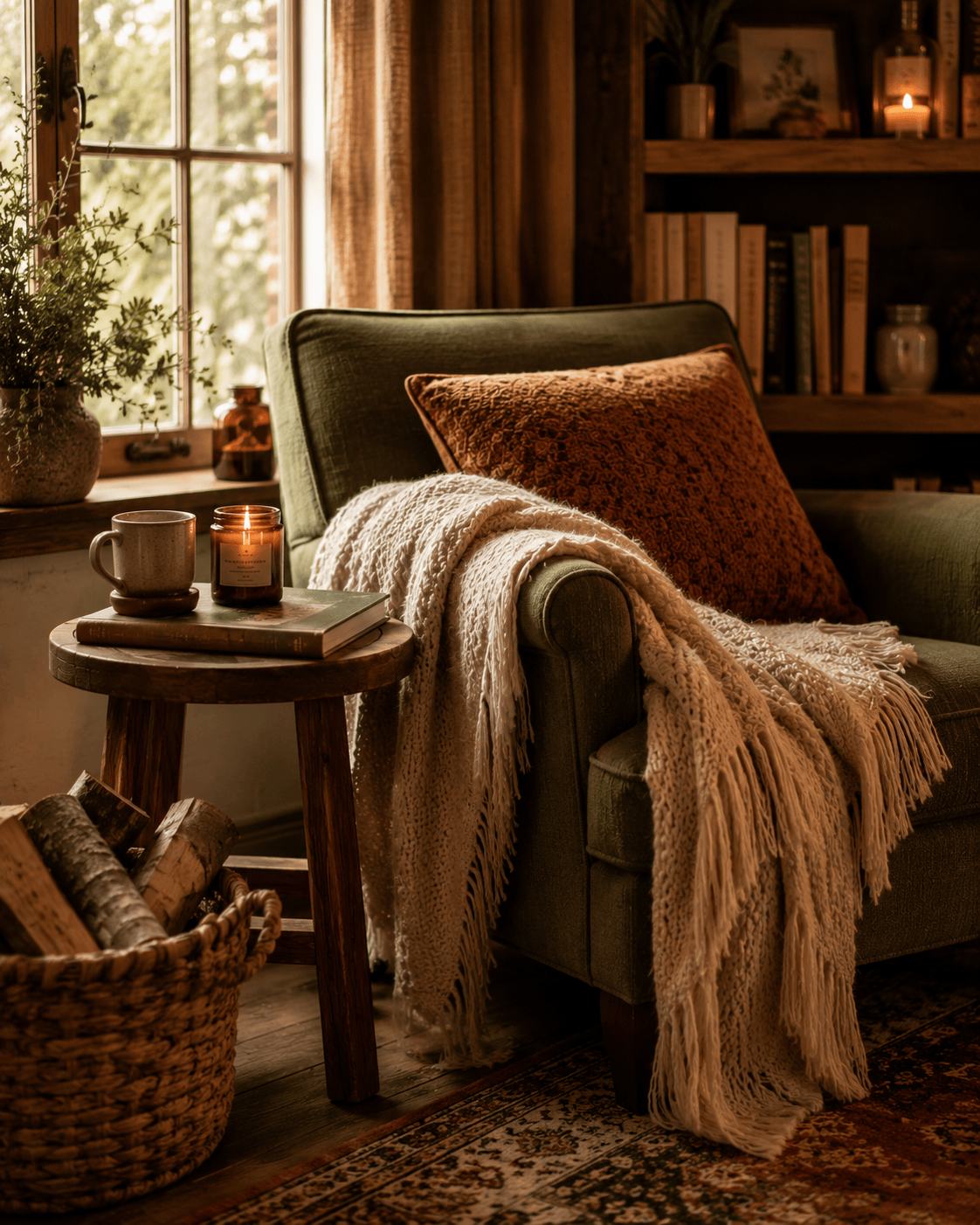
Cabincore isn't about owning a cabin — it's about borrowing the feeling of one: slower mornings, warmer light, and a home that feels like a retreat rather than just a place you pass through. And unlike a lot of trends, it's built to last through the whole winter season, not just one viral month.
Whether you're starting with a single throw blanket or building out a full reading nook, the goal is the same: make the room feel like somewhere you actually want to slow down in.
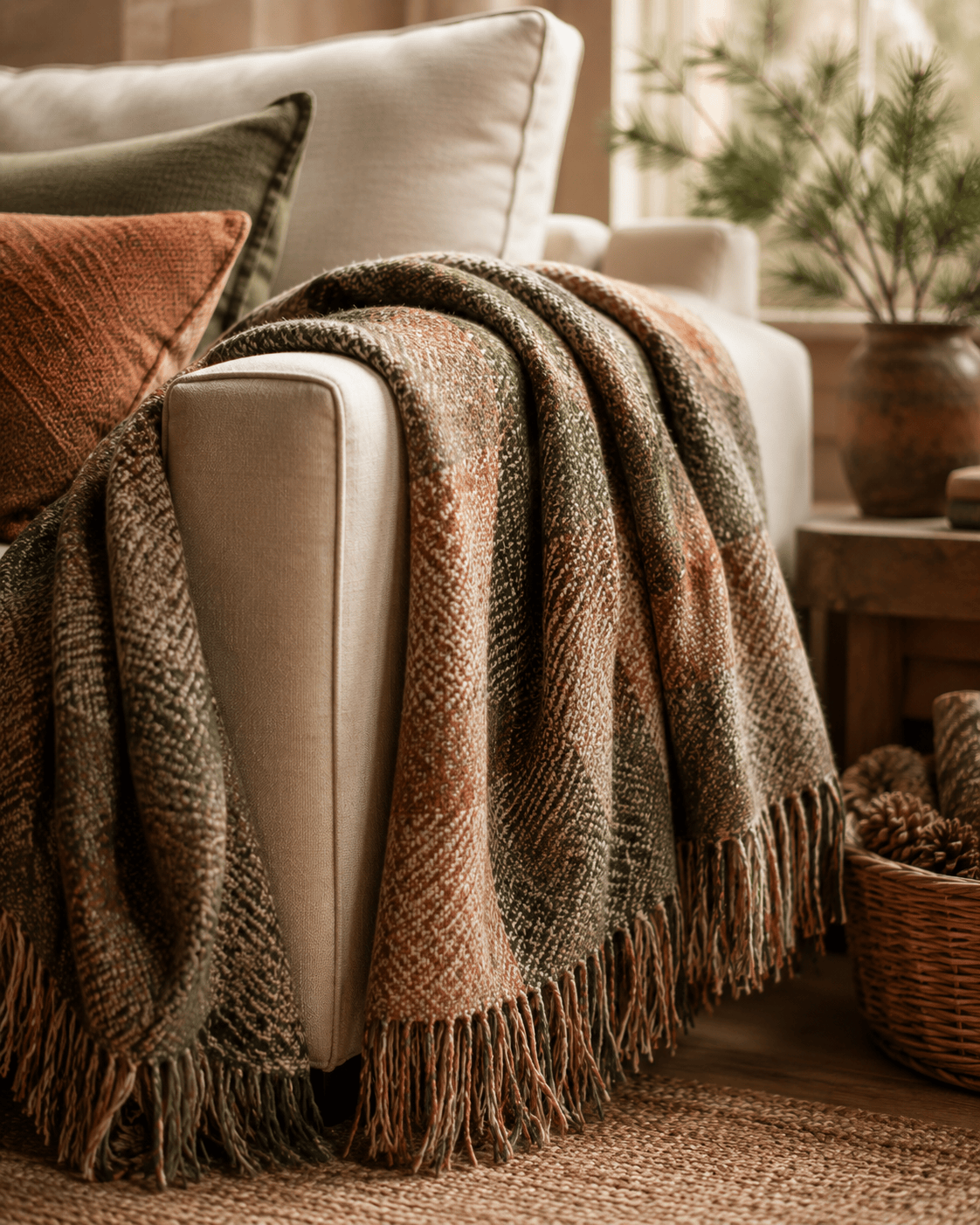
Looking for a place to start? Our Cabincore throw blanket collection is designed around exactly this aesthetic — soft, textured, and made for the kind of evening this whole trend is built around.