Save 25% on Mountain Art.
Free shipping on qualifying orders.


What Makes Good Powder: The Science Behind the Feeling of Floating
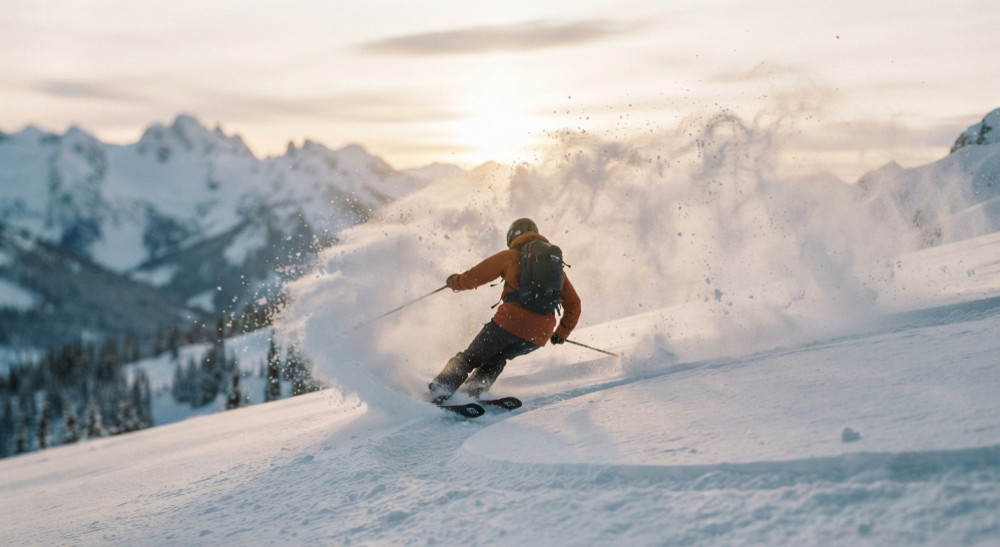
There's a specific silence that happens the moment your skis leave the packed snow and drop into something untouched. The usual scrape and chatter of edges on hardpack just — stops. What replaces it is a soft, muffled hiss, and a sensation that has no real equivalent anywhere else in ordinary life: the ground gives way, just slightly, and instead of falling, you float.
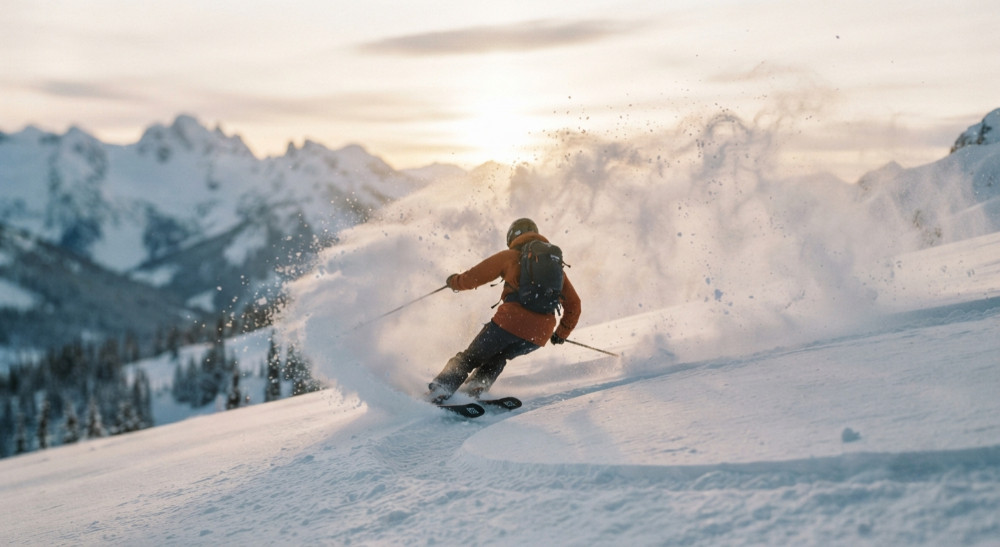
Skiers have spent entire careers trying to describe that half-second, and most of them land on the same word. It's not a metaphor. It's closer to physics than most people realize.
The Air Is the Point
Snow is mostly air. That's the part that surprises people the first time they hear it. A foot of genuinely light powder, melted down, might yield less than an inch of water — sometimes far less. The rest of that volume is trapped air, held in place by the delicate arms of the ice crystals stacked loosely on top of each other. That ratio, snow depth to liquid water content, is what skiers mean when they talk about a day being "light" or "heavy," and it's the single biggest reason two storms that drop the same number of inches can feel like entirely different sports.
Snow in the 8-to-11% water-content range is the everyday stuff — good, skiable, unremarkable. Drop below 7%, and something changes underfoot. The snow stops resisting. It stops packing under your boots. At the lightest end of the scale — the kind of storm that gets a nickname, that gets photographed, that people still talk about years later — the water content can fall low enough that the snow barely feels like a solid at all. That's the stuff locals in Utah and parts of British Columbia call champagne powder: so dry, so full of trapped air, that it doesn't so much support you as let you sink slowly through it while your skis do the work of staying near the surface.
Where That Lightness Comes From
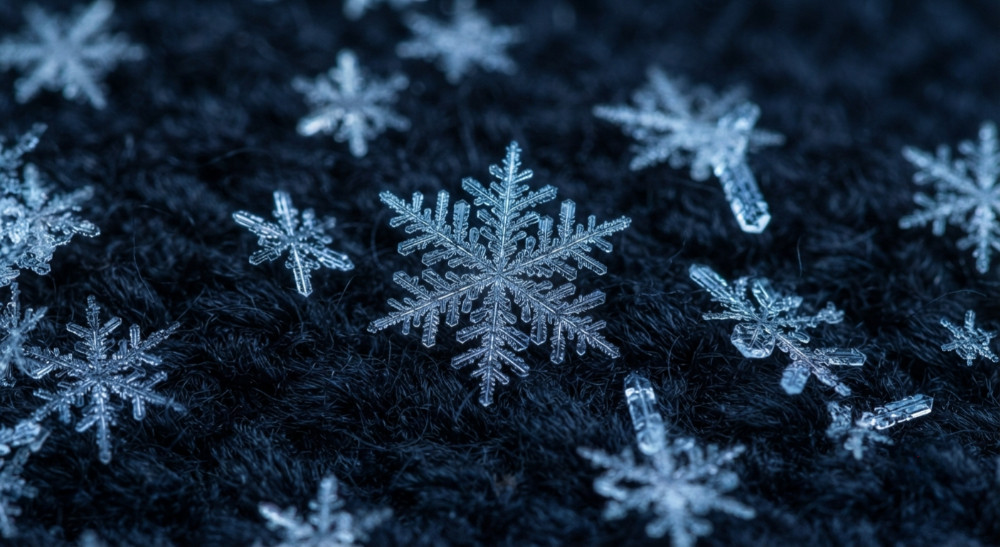
Snowflakes aren't formed on the ground — they're built in the storm cloud, high above the peak, and the temperature up there while they're forming decides almost everything about how they'll feel once they land. Somewhere in a narrow band, roughly -12°C to -18°C at the level where the crystal is actually growing, ice tends to build itself into the big, feathery, six-armed shapes most people picture when they hear the word snowflake. Those elaborate shapes trap enormous amounts of air between their arms as they pile up. Warmer than that range, and the crystals come down smaller, simpler, denser — closer to grains than feathers. Colder than that range, oddly enough, and the magic starts to fade too; crystals that form in extreme cold tend to be smaller and slower to build the elaborate structure that makes powder feel the way it does.
Moisture matters just as much as temperature. A cold, dry storm — the kind that rolls off the interior of a continent rather than straight off an ocean — tends to starve the crystals of extra water, keeping them light. A warm, moisture-loaded storm coming straight off the Pacific builds bigger, wetter flakes that pack down fast. It's the reason coastal ranges earn nicknames like Cascade Concrete and Sierra Cement, while interior ranges hundreds of miles inland, catching the same storm system after it's wrung out over the coast, get the dry, weightless stuff instead.
Wind is the last variable, and it's the one that can undo everything the storm just built. Snow crystals are fragile — genuinely, physically fragile, in the way a fern frond is fragile. Strong wind during a storm shatters those delicate arms before they ever settle, and the broken fragments pack together far more tightly than intact crystals ever would. A forecast can promise the lightest snow of the season, and a 40 mph ridge-top wind can turn it into something closer to sand by the time it lands. This is the same mechanism, incidentally, behind wind slab — the dense, cohesive snow layer that backcountry travelers watch for as an avalanche hazard, which is exactly why "windy and cold" doesn't automatically mean "great powder day" the way "calm and cold" does.
Where It Hides Once It Lands
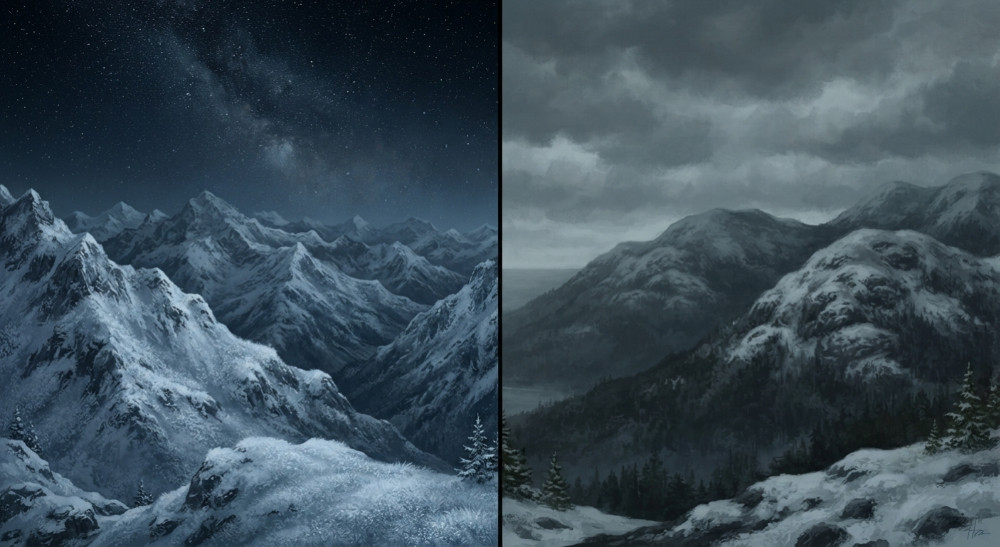
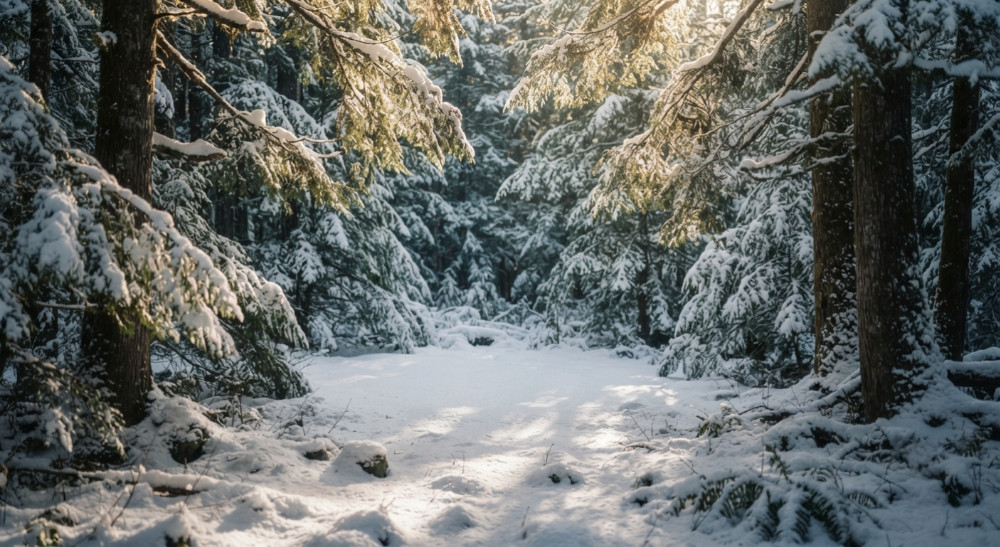
Not every square foot of a mountain holds onto that lightness the same way, and this is where terrain starts to matter as much as the storm itself. Slopes that face away from the sun — generally north-facing in the Northern Hemisphere — stay colder for longer after a storm passes, which means the snow there resists warming, settling, and turning heavy for days after south-facing slopes have already gone soft. Trees do something similar for a different reason: a dense canopy blocks direct sun and shelters the snow underneath from the wind that would otherwise pack it down, which is why "the trees are still good" is one of the most reliable phrases in ski-town vocabulary two or three days after a storm.
Timing does the rest of the work. The first few runs after a storm ends are functionally a different substance than the same slope twelve hours later — sun, skier traffic, and settling all start compacting that trapped air out of the snowpack almost immediately. This is the entire reason the 5 a.m. alarm exists as a ski-culture ritual. It isn't really about being first in line. It's about catching the snow before it stops being what the storm made it.
How the Body Learns to Trust It
Everything about skiing groomed snow trains you to do the opposite of what powder rewards. On packed snow, weight forward, quick edge changes, and aggressive pressure into the front of the ski are what make a turn work. Put that same instinct into a foot of light powder and the tips dive, the skis stop, and the mountain wins. Powder asks for weight centered or even slightly back, skis kept close enough to act as one wide platform, and turns that unfold in slow, sweeping arcs instead of sharp pivots — closer to a rhythm than a series of corrections. Speed, counterintuitively, is your friend here: enough forward motion lets the ski's shovel plane up toward the surface the way a water-ski needs speed to rise off the lake, and going too slow is what actually causes a skier to bog down and fight the snow instead of floating on it.
It's a genuinely different sport wearing the same equipment, which is part of why the first time it clicks — the first run where the skis start floating instead of fighting — tends to be the run people remember for the rest of their skiing lives.
The Culture Built Around a Feeling
Spend any time in ski forums during a big storm cycle and you'll notice the vocabulary gets almost reverent. People trade phrases like "hero snow" and "blower pow" the way other communities trade inside jokes, and there's a recurring, only-half-joking pattern of skiers describing powder days in the same language usually reserved for something closer to a religious experience — silence, floating, weightlessness, time slowing down. That's not just enthusiasm talking. It tracks with the physical reality underneath it: genuinely low-density snow removes nearly all the resistance and friction a body expects from solid ground, and there aren't many other ordinary experiences that replicate that particular sensation of controlled falling. The obsession makes more sense once you know what's actually happening under the skis.
Back to That First Half-Second
All of it — the crystal shape, the trapped air, the cold storm cloud, the sheltered north-facing tree line, the way a body has to unlearn its own instincts to trust the float — collapses back down into that one moment: skis leaving the packed trail, the world going quiet, and the sensation of the ground giving way instead of pushing back. That's not an accident of good luck. That's a very specific, very fragile set of conditions, and understanding it is most of what separates a skier who's had a good day from one who's had a legendary one.